Felt vs Rubber Roofing for UK Flat Roofs

A leaking garage, extension or garden room rarely needs an exotic solution. It needs the right roof covering, properly specified and fitted with compatible edges, outlets and details. When weighing up felt vs rubber roofing, the decision usually comes down to the roof’s size and shape, how long you expect it to last, the installation method, and the budget available now.
Both systems are proven choices for UK flat roofs. Modern roofing felt is far removed from the basic shed felt many people remember, while EPDM rubber roofing is valued for its clean finish and long service life. Neither is automatically the best option for every job.
Felt vs Rubber Roofing: the Key Difference
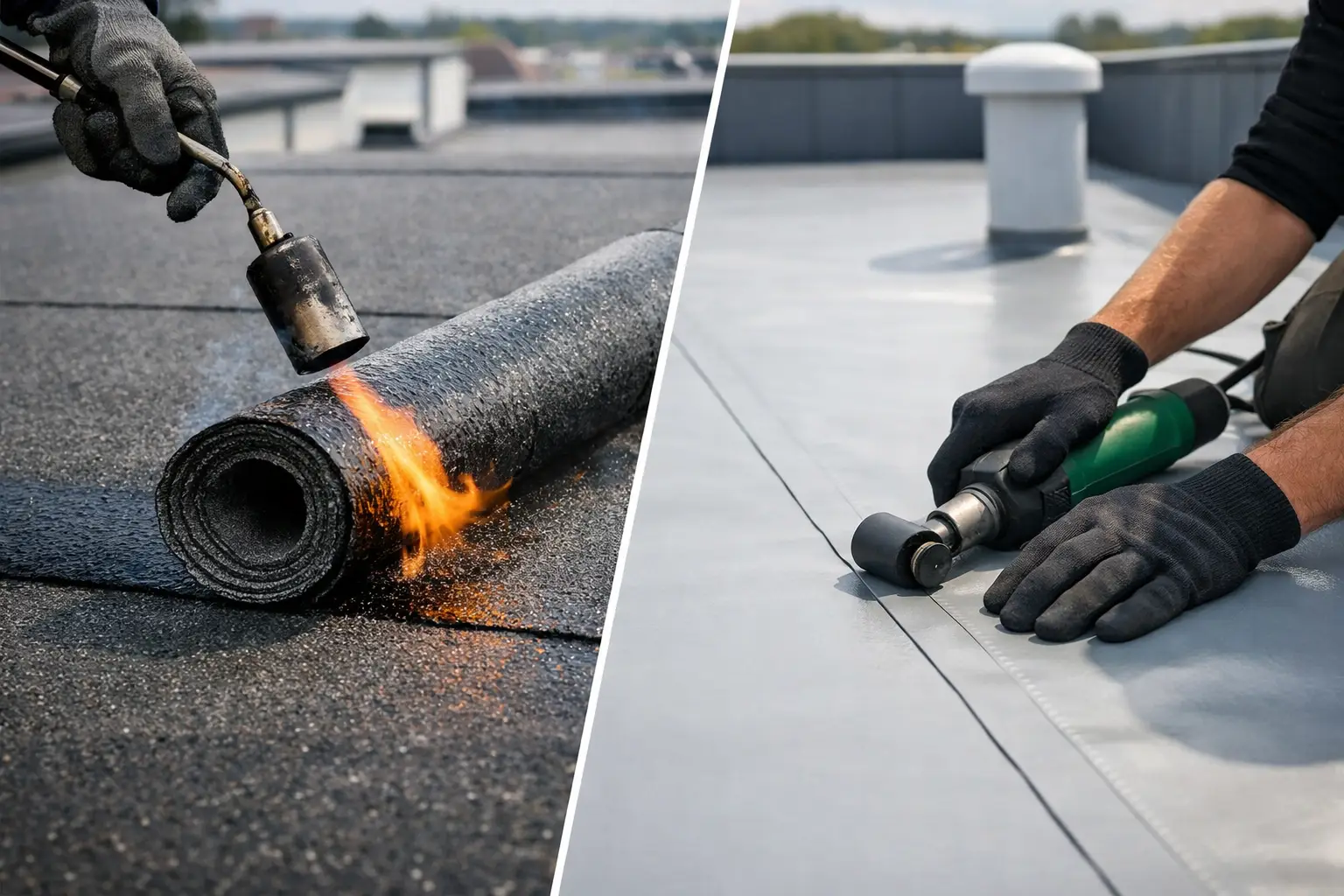
Roofing felt, often called modified bitumen felt, is generally installed as a layered system. The material is supplied in rolls and bonded to the roof deck using a suitable method, commonly torch application or cold-applied adhesive depending on the product and site conditions. A mineral-finished cap sheet forms the visible weathering layer.
Rubber roofing usually refers to an EPDM membrane. This is a synthetic rubber sheet supplied in large sections, allowing many small and medium-sized roofs to be covered with few or no joints across the main area. It is normally adhered to a prepared deck with the appropriate adhesive, with seams and perimeter details completed using dedicated tapes, trims and accessories.
The practical difference is not simply felt versus rubber. It is a comparison between a multi-layer, highly adaptable system and a single-ply membrane system that can cover a clear roof area quickly. In either case, the performance of the roof relies heavily on sound preparation and well-finished details.
Lifespan and Weather Resistance
A professionally installed, quality felt roof can offer a long and dependable service life. Modern SBS-modified bitumen systems remain flexible in lower temperatures and are designed to cope with regular British rainfall, UV exposure and seasonal movement. The result depends on the number of layers, product quality and the standard of installation.
EPDM has an excellent reputation for durability. It remains flexible over time, handles temperature changes well and has strong resistance to UV exposure. With fewer seams on a straightforward roof, it also reduces the number of potential weak points across the main surface.
For a simple rectangular garage or garden room roof, EPDM is often attractive because a single membrane can cover most of the area. For roofs with several changes in level, awkward corners, penetrations or complex junctions, felt can be easier to work around. It can be cut and dressed in smaller sections, allowing installers to build up secure details where the roof shape is less forgiving.
Standing water should not be ignored with either material. A flat roof should have sufficient falls to direct water towards the correct drainage point. No membrane can compensate for a deck that has sagged, blocked outlets or poorly planned drainage.
Cost: Look Beyond the Roll or Membrane Price
Material cost is only one part of the decision. Felt may appear more economical on some projects, particularly where the roof is small or the installer already has the equipment and experience for the chosen system. However, a proper felt specification includes the underlay, cap sheet, adhesives or gas for torching, primers, trims and any required flashing materials.
EPDM can cost more upfront per square metre, but its large sheet format can reduce installation time on uncomplicated roofs. That may make the overall fitted cost competitive. The membrane still needs compatible deck adhesive, contact adhesive for edges and upstands, seam materials where required, and suitable perimeter trims.
Labour is particularly relevant when comparing the two. A skilled installer can lay either system efficiently, but the methods are different. Torch-on felt requires trained handling of an open flame and careful attention around combustible materials. Cold-applied felt systems are available where a flame-free approach is preferred, although the product specification and curing conditions must be followed closely.
For homeowners, the cheapest quote is not always the lowest-cost roof. Check what the price includes: removal of old coverings, deck repairs, insulation work, drainage details, edge trims, waste disposal and the exact system being installed. A quote that names the layers and finishing components is easier to assess than one that simply says “new flat roof”.
Installation Considerations for Trade and DIY Projects
EPDM is often considered more approachable for competent DIY users because it is installed without a naked flame. That does not mean it is a fit-and-forget material. The deck must be clean, dry, smooth and secure, especially if the membrane will be bonded over it. Folds, trapped air and poorly adhered edges can all affect the finished roof.
The membrane also needs time to relax before fitting. Adhesives should be applied at the recommended coverage rate and temperature range, while edge details must be securely fixed to resist wind uplift. A neatly bonded sheet with weak perimeter trims is not a completed roofing system.
Felt installation is usually better suited to experienced roofers, especially when torching is involved. It offers reliable results where the correct overlaps, bonding and detailing are achieved, but these details cannot be rushed. A failed lap or inadequate seal around an upstand can allow water beneath the surface layers.
Whichever system you choose, start with the roof deck. Replace damaged boards, remove protruding fixings and make sure the substrate is suitable for the chosen material. Check whether the project needs insulation upgrades or a vapour control layer before ordering the weathering layer. It is far easier to get the build-up right before the covering is installed.
Repairs and Ongoing Maintenance
Both felt and EPDM benefit from occasional inspection, particularly after severe weather. Clear leaves and debris from outlets, gutters and drainage channels so water can leave the roof freely. Look for lifted edges, damaged trims, punctures and signs of water tracking at junctions.
Felt repairs can often be localised. Small damaged areas may be cut back and repaired with compatible materials, provided the surrounding system is dry and sound. Blistering, widespread cracking or recurring leaks may point to a larger problem beneath the visible surface, such as trapped moisture or a failing deck.
EPDM repairs are commonly made with compatible primer and patch materials. The repair area must be thoroughly cleaned and dry for tapes or patches to bond properly. This makes small accidental punctures manageable, but repairs should still be completed using products designed for the membrane rather than general-purpose sealants.
Avoid assuming a coating or sealant will cure every leak. If water is entering through a failed corner detail, split lap or damaged substrate, covering the symptom can delay the repair while allowing the underlying issue to worsen.
Which Roofing System Is Right for Your Job?
Choose felt when the roof has intricate details, when a layered bitumen system suits the specification, or when a qualified installer is carrying out the work. It remains a dependable option for domestic and commercial flat roofing when paired with the correct underlays, cap sheets and edge details.
Choose EPDM when the roof is a relatively simple shape, you want a clean single-ply finish and long-term flexibility is a priority. It is also a practical choice for projects where a flame-free installation method is preferred.
The best choice is the one that fits the roof build-up, installation conditions and expected service life, not simply the one with the lowest initial material price. Before ordering, measure the roof carefully, allow for upstands and perimeter details, and make sure every trim, adhesive and drainage component is compatible with the selected system. A well-planned roof covering gives you fewer surprises on installation day and far greater confidence when the weather turns.
Share This Article
Follow Us
Latest Articles
August 8, 2026
August 6, 2026
August 4, 2026
