
Essential Checks for Buying Flat Roofing Felt

A flat roof can look like a simple rectangle on a plan, but the covering is only reliable when every layer and detail works together. When buying flat roofing felt, the right choice depends on the roof deck, the installation method, the expected foot traffic and the components used at edges and upstands. Getting those details right before ordering avoids wasted material, delays on site and short-lived repairs.
Start with the job, not the roll size
Roofing felt is often used to describe several bituminous products, from economical shed coverings to multi-layer felt systems for garages, extensions, porches and commercial work. They are not interchangeable. A temporary repair, for example, calls for a different level of performance from a new roof that needs to withstand years of weather exposure.
First, establish whether you are repairing an existing felt roof or installing a complete new system. For a repair, inspect the existing surface carefully. Blisters, cracks, lifting laps and standing water may point to a wider issue than a local patch can solve. Applying a new layer over a damp, unstable or badly degraded surface can simply hide the problem for a short time.
For a replacement roof, consider the whole build-up: deck, vapour control layer where required, insulation, underlay and cap sheet. A felt system performs as a system, so choosing one product in isolation is rarely the best approach.
Buying flat roofing felt for the right system
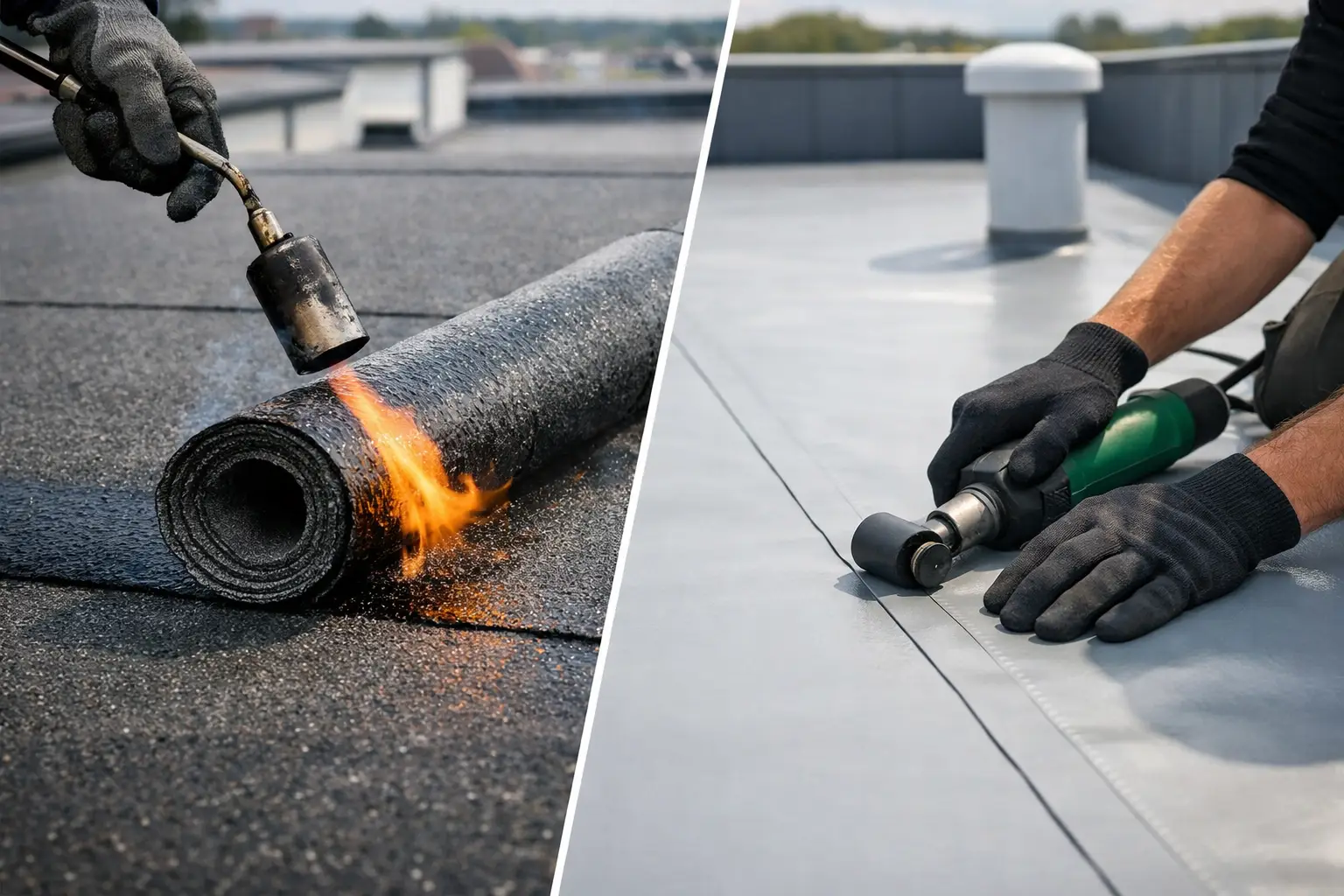
The installation method should guide the product selection. Torch-on felt is widely used for durable built-up roofing systems, with heat used to bond the membrane and seal laps. It can provide a strong, dependable finish when installed correctly, but it requires suitable experience, safe working practices and careful control around combustible materials.
Self-adhesive felt removes the need for an open flame and can be a practical option where torch application is unsuitable. It still needs a clean, dry, properly prepared substrate and appropriate weather conditions for a secure bond. Cold-applied systems use a compatible adhesive rather than heat, which may also suit particular sites or repair work.
Do not assume that any underlay, cap sheet, adhesive and primer will work together. Check that all products are specified as compatible by the manufacturer. Mixing products without confirmation can affect adhesion, warranty terms and long-term performance. If you are unsure, it is worth asking for guidance before placing the order rather than trying to resolve a compatibility problem once materials have arrived.
Underlay and cap sheet have different roles
In a conventional built-up felt roof, the underlay forms part of the waterproofing base while the cap sheet creates the exposed, weather-facing finish. The cap sheet commonly has a mineral surface to protect the bitumen from ultraviolet light and everyday weathering.
Using a cap sheet alone where a multi-layer system is required can leave the roof with less protection than intended. Equally, buying two similar-looking rolls without checking their purpose can result in an unsuitable build-up. Read the product description, thickness and application guidance, and make sure the system matches the roof design.
Check the roof deck and substrate condition
A good felt covering cannot compensate for a poor base. The deck needs to be sound, dry, clean and adequately supported. Loose boards, sharp projections, old adhesive residue and trapped moisture can affect both the finish and the service life of the membrane.
The substrate also determines whether a primer or specific preparation is required. Primers help create a suitable surface for adhesion on certain decks and existing coverings, but they must be fully dry before further work begins. Skipping preparation to save time often causes more disruption later, particularly where laps or perimeter sections begin to lift.
If insulation is part of the project, confirm how the felt system will be installed over it. Insulation boards, mechanical fixings, adhesives and membranes need to be specified as a compatible assembly. This is particularly relevant on warm roof constructions, where moisture control and secure detailing are essential.
Measure coverage properly and allow for laps
The roof area is only the starting point for working out how much felt to buy. Rolls overlap at side laps and end laps, and extra material is needed for upstands, abutments, penetrations and trimming at roof edges. Ordering solely on the square metre area can leave you short before the final section is complete.
Measure the length and width of each roof section, then calculate the gross area. Add a sensible allowance for overlaps and cuts, especially on roofs with awkward shapes, rooflights, pipe penetrations or several changes in direction. The required allowance depends on the roll dimensions and installation instructions, so check the stated coverage rather than relying on a rough estimate.
It is generally more efficient to order a little more from the same batch than to stop work because one roll is missing. A small surplus can also be useful for future minor repairs, provided it is stored correctly in a dry, protected area.
Do not overlook drainage and roof falls
Flat roofs are designed to shed water, even though the fall may be subtle. Before choosing materials, check where water will run and how it will reach the outlet, gutter or drainage point. Pooled water can accelerate wear, expose weak detailing and make a sound-looking roof feel unreliable.
Felt can form part of a durable waterproofing solution, but it cannot correct inadequate falls or a blocked drainage route. If water regularly sits on the roof after rainfall, investigate the cause before renewing the covering. It may be necessary to address the deck, falls or outlet arrangement as part of the work.
This is also the point to consider future maintenance. Drainage points should remain accessible for clearing leaves and debris. A roof that is difficult to inspect is more likely to develop a minor issue into a larger repair.
Order the detailing materials at the same time
Most leaks occur at details rather than in the middle of an open roof area. Edges, corners, junctions, upstands and service penetrations all need a planned approach. Buying the felt without the required trims, flashings, outlets, adhesives or termination materials can hold up installation and encourage improvised fixes.
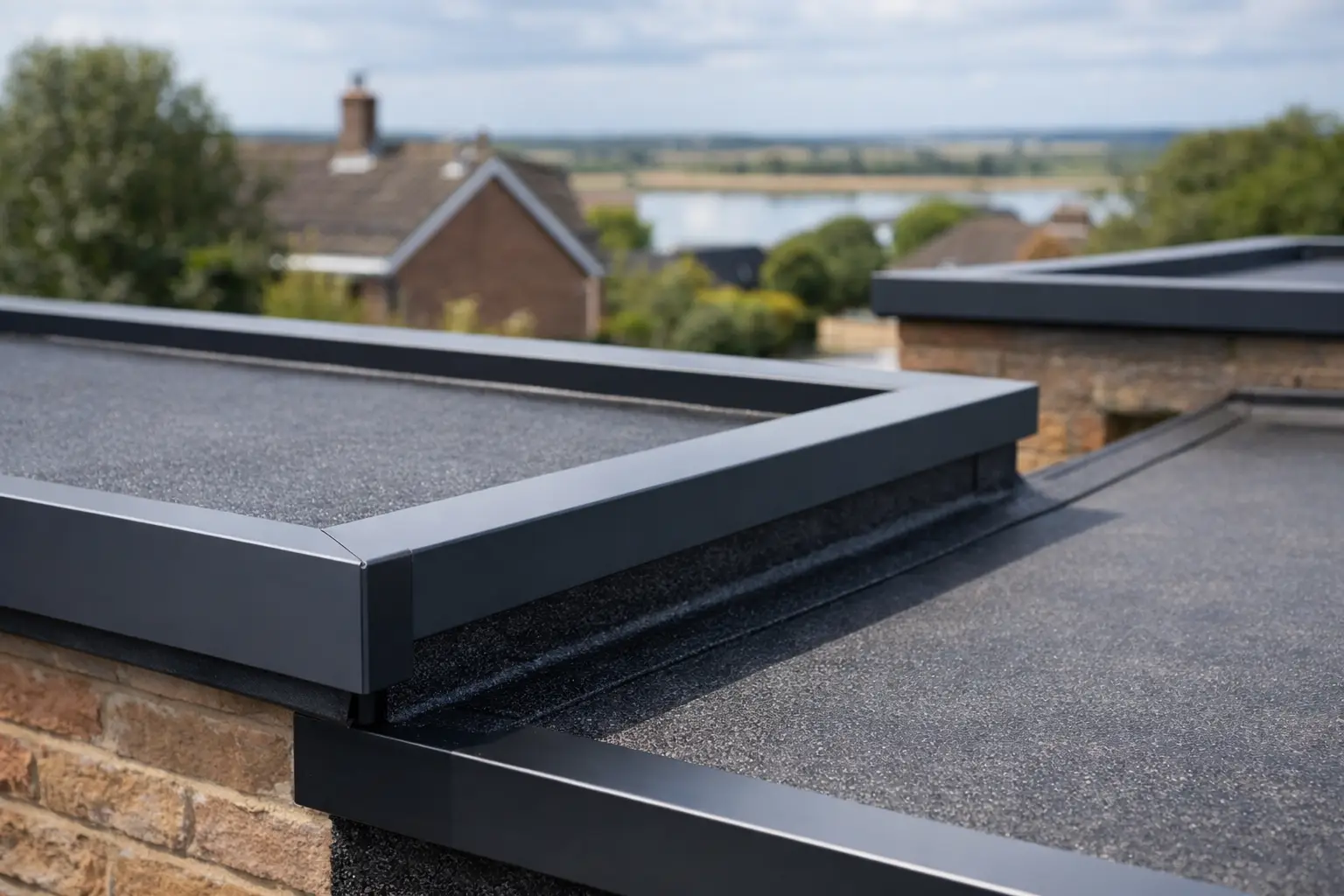
Roof edge trims are especially important because they protect vulnerable perimeters and help direct water correctly. Select trims that suit the roof build-up and the intended finish, then check their dimensions against the deck and fascia arrangement. The correct trim should complement the membrane system rather than force the installer to alter laps or fold felt in ways that compromise drainage.
For upstands against walls or other vertical surfaces, allow enough material to create the required waterproof turn-up. Corners should be detailed carefully, with compatible accessories where needed, rather than stretched or cut in a way that leaves a weak point.
Consider weather, storage and installation timing
Roofing work is affected by weather more than many buyers expect. Most felt products need a dry surface, and adhesive or self-adhesive systems can be particularly sensitive to low temperatures and moisture. Check the manufacturer’s application conditions before scheduling the work.
Keep rolls protected from rain, excessive heat and physical damage before installation. Store them upright where the manufacturer advises this, and avoid leaving materials exposed on site for longer than necessary. If the roof deck becomes wet during the project, let it dry properly before continuing.
For torch-on products, safety is a central consideration. Open-flame work should only be carried out by competent installers using appropriate equipment and site controls. Where that is not suitable, a self-adhesive or cold-applied alternative may be the better route.
Balance price against expected service life
The cheapest roll is not always the lowest-cost solution. A thinner, basic product may be suitable for a small outbuilding or short-term repair, while a home extension or regularly maintained commercial roof usually justifies a more durable system. The key is to match the product specification to the demands of the job rather than overbuying or under-specifying.
Look at material thickness, reinforcement, surface finish, installation method and the intended system build-up. Also consider the practical cost of failure: access, labour, disruption and damage caused by a leak can quickly outweigh the saving made on an unsuitable covering.
Quality Roofing Supplies Ltd provides trade-quality roofing materials for professional installers and domestic customers alike, with straightforward ordering and helpful support when product selection needs a second check. If the roof design, deck condition or detailing is unclear, confirm the specification before the rolls are ordered. A few minutes spent matching the felt, accessories and application method to the roof can make the installation far more dependable from the first lap to the final edge trim.
Share This Article
Follow Us
Latest Articles
August 8, 2026
August 6, 2026
August 4, 2026
