
Can Roofing Felt Be Repaired?

A small split in flat roofing felt rarely stays small for long. Once water gets under the surface, the problem can move beyond a simple patch and into damp insulation, timber damage, and repeat call-backs. So, can roofing felt be repaired? Yes – in many cases it can – but the right fix depends on the age of the felt, the size of the damage, and whether the roof system is still sound overall.
For both trade installers and homeowners, the key is knowing when a repair is practical and when it is only delaying a larger job. Roofing felt is designed to be durable, but it is still exposed to standing water, UV, foot traffic, movement in the deck, and weathering over time. Some defects are localised and easy to deal with. Others are a sign that the covering has reached the end of its serviceable life.
Can roofing felt be repaired in every case?
Not every felt roof should be repaired, even if it technically can be. A localised puncture, lifted joint, small blister, or split around an edge detail can often be repaired successfully with compatible materials and correct preparation. If the surrounding felt remains well bonded and flexible enough to work with, a patch repair can be a sensible option.
Where repairs become less worthwhile is on roofs with widespread cracking, multiple leaks, saturated substrate, or repeated failures around seams and upstands. In those cases, the felt may no longer be performing as a system. Patching one area can stop one leak while another appears a few weeks later. That is not good value for the customer and it is not a dependable long-term result.
A repair also depends on access and conditions. If the roof surface is wet, contaminated, or unstable underfoot, pushing ahead with a quick fix can do more harm than good. Clean, dry preparation matters just as much as the patch itself.
The types of felt roof damage that can usually be repaired
Some problems are straightforward. Minor punctures caused by dropped tools or light foot traffic are often suitable for patching. Small splits can also be repaired, particularly if they have occurred in a limited area rather than across the roof field.
Open laps or failing joints are another common issue. If the rest of the membrane is sound, these can often be resealed or overpatched. Damage at details such as drip edges, kerbs, outlets and abutments is also often repairable, because these are high-stress points where local movement or poor adhesion may be the main cause.
Blisters need a bit more judgement. A stable blister that is not letting water in may not always need immediate attention. A blister that has cracked, feels soft, or is holding moisture is more likely to need repair. The same goes for surface mineral loss. On its own, that is not always a failure, but if the felt beneath is exposed and deteriorating, local repairs may be needed.
When repair is the wrong option
There is a difference between a repairable fault and a failing roof. If leaks are appearing in several locations, the deck feels soft, or the felt is brittle across large areas, patching is usually a short-term measure at best. Trapped moisture beneath the covering can travel, so the visible leak point inside the building is not always directly below the fault.
Age matters too. Older felt roofs can become less flexible and more prone to splitting when worked on. Even a neatly installed repair may not bond well if the existing surface is badly weathered. If the roof has already had multiple repairs, it is worth asking whether another one is genuinely cost-effective.
For contractors, this is often where expectation-setting matters most. A customer may ask for the cheapest fix, but if the roof is near the end of its life, a patch should be described honestly as a temporary measure. For homeowners, that clarity helps avoid spending money twice.
What makes a roofing felt repair last?
A lasting repair is usually less about the patch size and more about preparation and compatibility. The damaged area needs to be cleaned properly, any loose material removed, and the surface dried before repair products are applied. If moisture is sealed in, the repair can fail early.
Using materials that suit the existing felt system is just as important. Bitumen-based repairs need products that bond reliably with the roof covering already in place. The patch should extend beyond the damaged section far enough to reach sound material, not just cover the visible split by a few millimetres.
Detailing is where many repairs succeed or fail. Corners should be well formed, edges properly sealed, and the patch pressed down evenly to avoid voids. On larger repairs, installers may choose to cut back damaged felt and rebuild the area rather than simply cover over it. That takes longer, but it usually gives a better result.
Weather conditions also affect performance. Cold temperatures can reduce adhesion, while rain or surface moisture can compromise the bond. Even good materials will struggle if they are applied in poor conditions.
Common repair methods for roofing felt
The method depends on the fault and the roofing system. For minor damage, a bonded patch over the affected area is often enough. This is common for small tears, punctures, and isolated splits. The damaged surface is cleaned and prepared, then a compatible patch is fixed over sound surrounding felt.
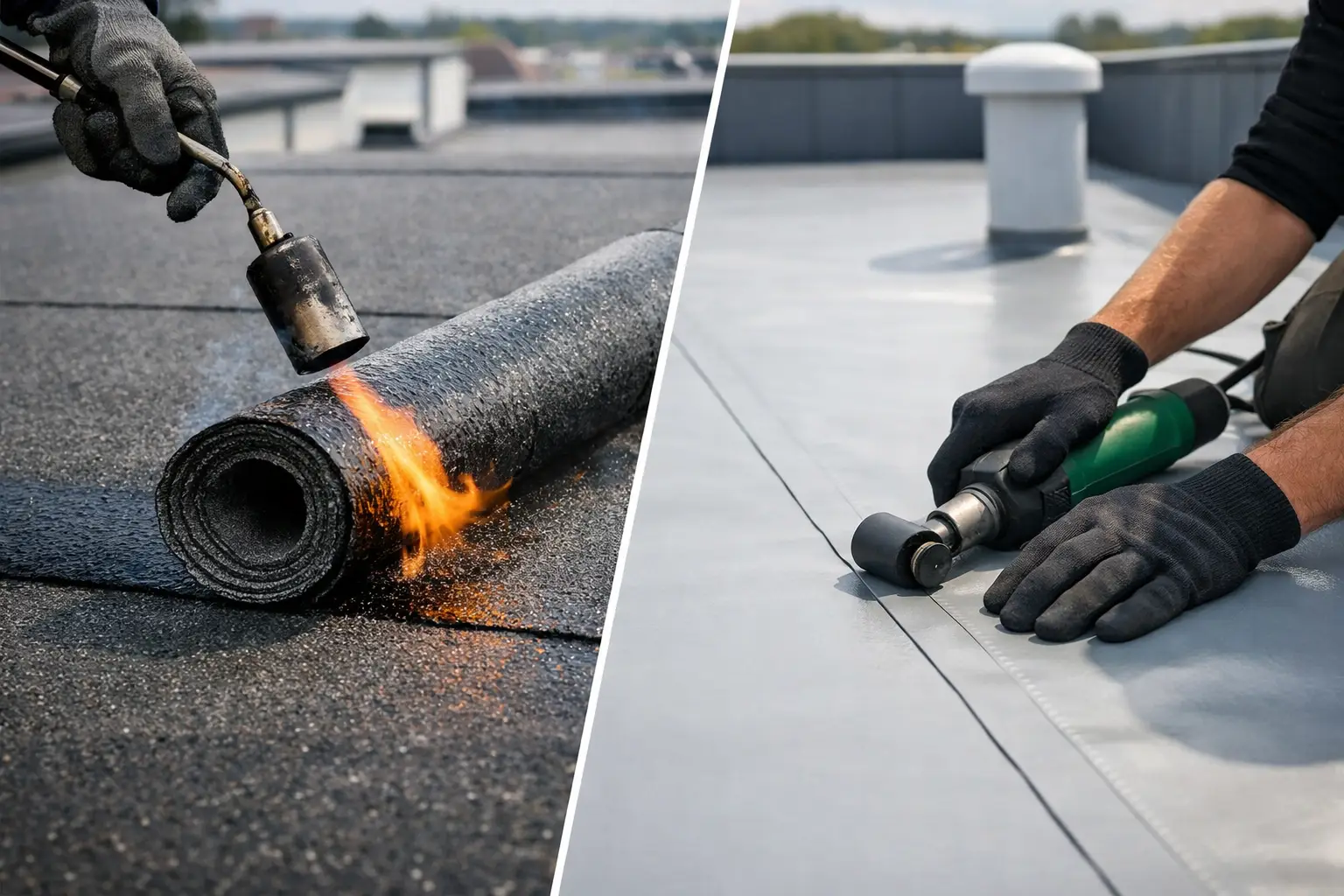
For lifted laps or detail failures, resealing may be possible if the felt remains usable. In other cases, a new section of felt is fitted over or in place of the failed area. On torch-applied systems, repairs should only be carried out by someone competent and properly equipped, as working with heat on a roof carries obvious risks.
Liquid repair products are sometimes used for temporary or localised repairs, especially around awkward details. They can be useful in the right context, but they are not a cure for widespread membrane failure. If the roof substrate is moving, the felt is perished, or water is trapped underneath, surface coatings alone will not solve the underlying problem.
Signs you should act quickly
Some faults can wait for planned maintenance. Others should be dealt with promptly. Water staining on internal ceilings, drips after rainfall, and visible splits in the felt all need attention before the damage spreads. Standing water that lingers long after rain can also point to drainage issues that are placing extra stress on the covering.
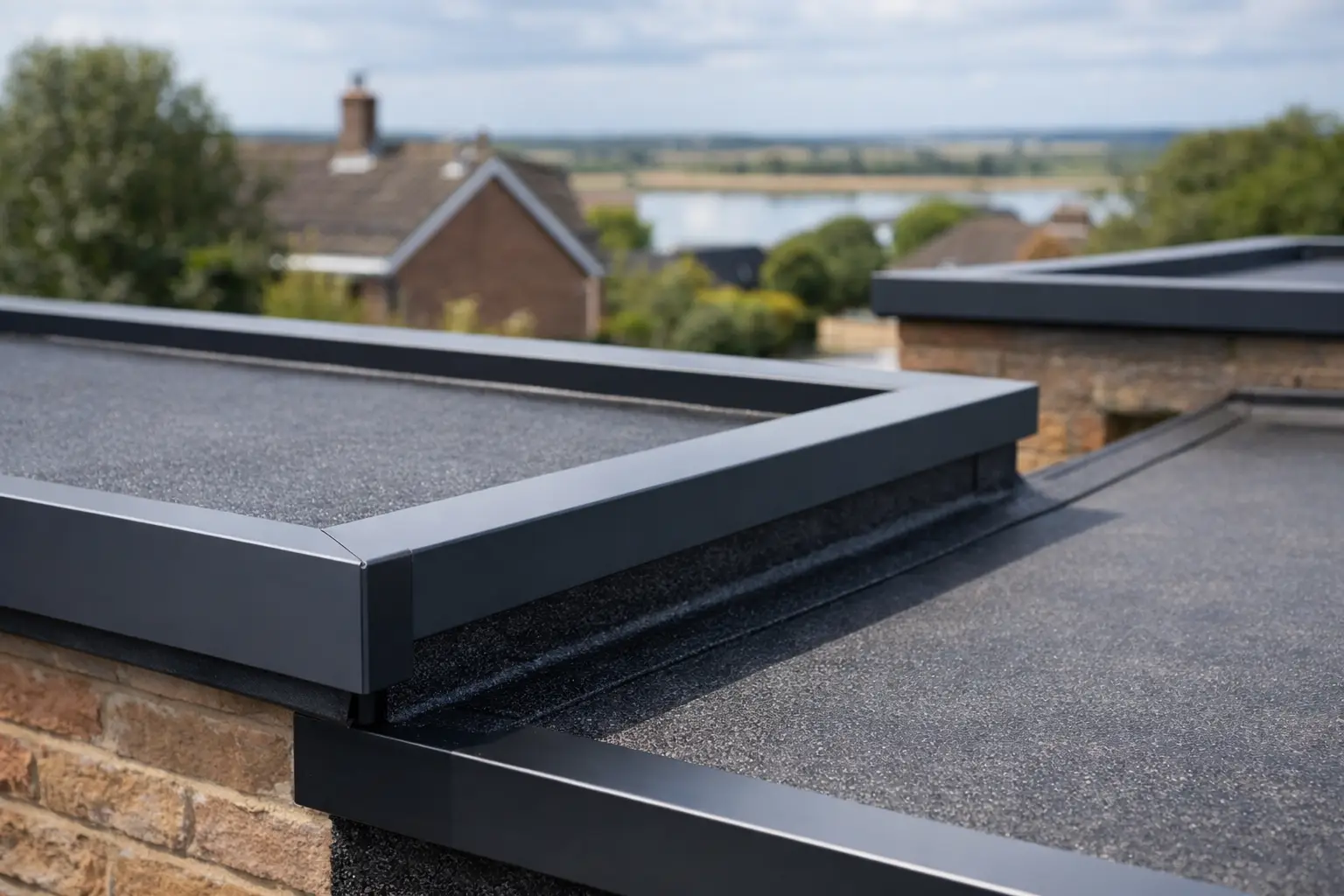
At roof level, look for lifted edges, exposed reinforcement, cracked blisters, and any area where the felt appears detached from the surface below. Flashing details and perimeter trims are also worth checking, as failure often starts at junctions rather than in the middle of the roof.
If the roof is on a garage, extension, dormer or outbuilding, it can be tempting to leave a small issue for later. In practice, later often means more extensive repairs, damaged timber, and a more expensive job than expected.
Repair or replace: how to decide
The practical question is not only can roofing felt be repaired, but should it be? If the fault is isolated and the roof is otherwise in good condition, repair is often the sensible route. It is quicker, lower in cost, and can add useful service life.
If the roof is showing repeated defects, widespread wear, or signs of moisture beneath the felt, replacement is often the better investment. That is especially true where access costs, labour time, and disruption make repeated repairs poor value. A cheaper patch is not always the cheaper option over twelve months.
For trade buyers, choosing the right route protects both margin and reputation. For domestic customers, it reduces the risk of paying for temporary work when a more lasting solution is needed. This is where using trade-quality materials and taking a realistic view of the roof condition pays off.
Getting the materials right
Even a small felt repair benefits from using proper roofing materials rather than general-purpose sealants that are not designed for the job. Compatibility between felt, adhesives, trims and repair compounds matters, particularly at edges and junctions where water pressure and movement are highest.
Quality Roofing Supplies Ltd works with customers who need dependable roofing materials without unnecessary complication, whether that is a contractor ordering for site work or a homeowner sorting out a domestic repair. The main thing is choosing products suited to the roof system and the scale of the defect, rather than reaching for a one-size-fits-all fix.
If you are looking at a damaged felt roof, the best approach is usually the simplest one – assess the condition honestly, repair local faults properly, and do not treat a failing roof as if it only has a small hole. A sound repair can buy valuable time, but a good decision at the start saves more trouble than any patch ever will.
Share This Article
Follow Us
Latest Articles
August 8, 2026
August 6, 2026

August 4, 2026
