How to Choose Roofing Felt Rolls for Flat Roofs

A failed roof covering rarely starts with a dramatic leak. More often, it begins with a lifted overlap, a split around an upstand or a surface that has become brittle after years of weather exposure. Choosing the right roofing felt rolls at the outset helps prevent those avoidable problems, whether you are repairing a garden building, refurbishing a garage roof or fitting a new flat roof covering.
Roofing felt remains a practical, cost-effective choice for many UK projects. The key is to match the material, build-up and fixing method to the roof itself rather than treating every roll as interchangeable. A dependable result depends on the condition of the deck, the roof fall, the expected foot traffic and the quality of the detailing at edges, joints and penetrations.
What roofing felt rolls are designed to do
Roofing felt rolls are bitumen-based waterproofing membranes supplied in manageable roll lengths. They form a continuous weatherproof layer over a roof deck, protecting the structure beneath from rain, wind and UV exposure. Many products include a mineral-finished top surface, which provides added protection from sunlight and gives the completed roof a durable finish.
Some felt is intended as an underlay layer within a built-up system, while other rolls are designed as the exposed cap sheet. Using the correct material in the correct position matters. An underlay on its own may not offer the weather resistance needed for a long-term external finish, while a cap sheet should not be used as a substitute for the full system where multiple layers are required.
For smaller, lower-risk jobs, a single-layer felt product may be suitable when installed exactly to the manufacturer’s guidance. For larger roofs, occupied buildings and jobs where service life matters most, a multi-layer built-up felt system is usually the more dependable option. It provides greater thickness and gives the roof more resilience if the surface is exposed to movement or occasional maintenance access.
Choosing the right felt for the job
The first decision is not colour or roll size. It is the type of installation you can safely and properly carry out. Roofing felt is commonly available for torch-on, self-adhesive or cold-applied installation. Each has a place, but the best choice depends on the project conditions and installer experience.
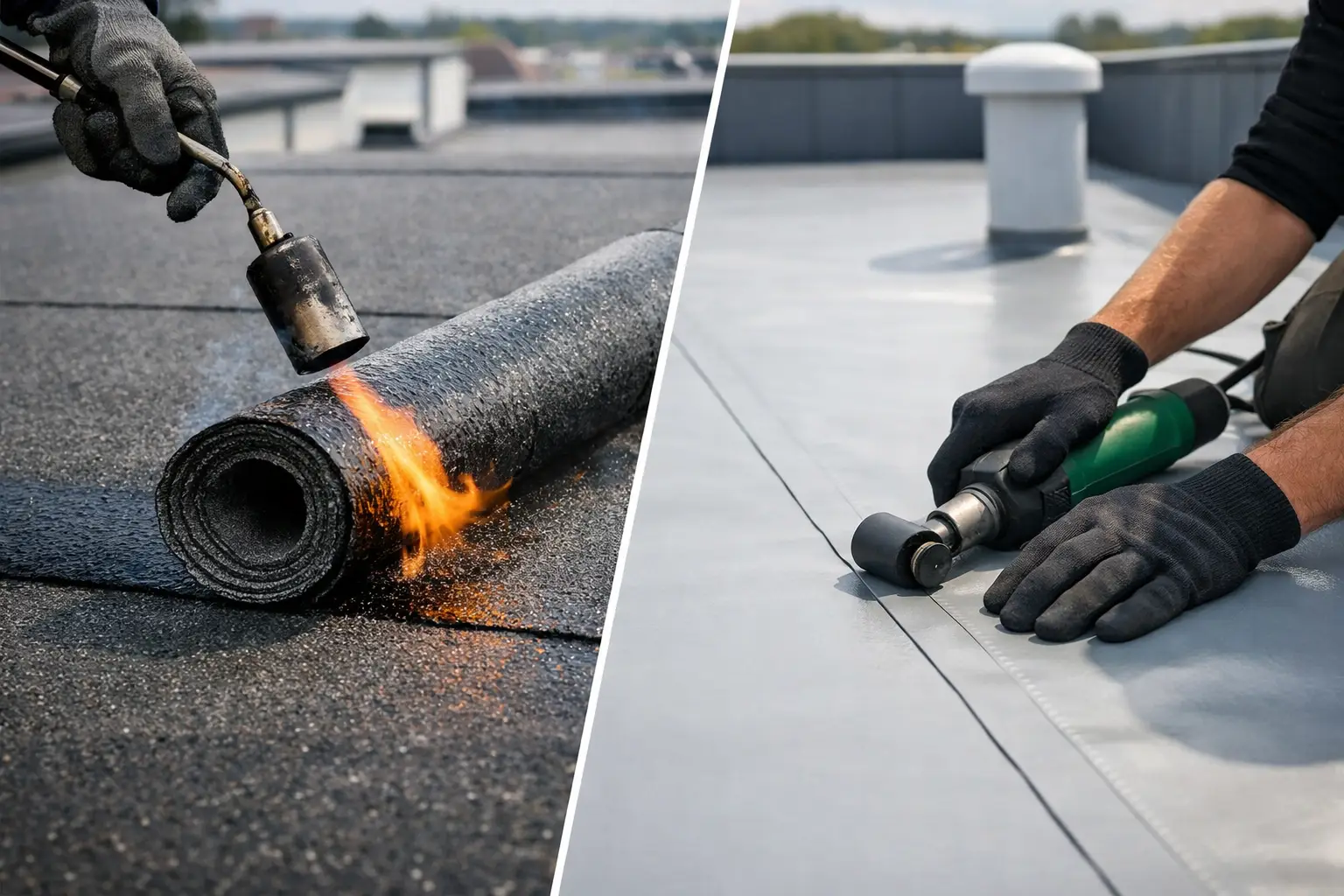
Torch-on felt creates strong bonded laps when installed correctly. It is widely used on professional flat roofing work because it forms a secure, durable membrane system. However, it requires competent handling of a gas torch and careful attention to fire safety. It is not the right method where hot works are unsuitable or where the installer is not trained and equipped for the task.
Self-adhesive felt avoids the need for an open flame, making it a useful option for certain domestic repairs and areas with restricted hot works. Surface preparation is particularly important, as dust, moisture and poor adhesion can compromise the bond. Cold-applied systems can also be practical for repair work, although curing times, weather conditions and adhesive coverage must be considered.
Thickness and reinforcement are equally relevant. A heavier, reinforced felt generally offers better resistance to tearing and movement than a lightweight product. That does not mean the thickest material is always necessary. A small outbuilding with a sound deck has different demands from a larger roof exposed to regular weathering, drainage points and service traffic.
Mineral finish and appearance
Mineral-finished cap sheets are the visible top layer on many felt roofs. The mineral coating shields the bitumen from UV degradation and helps the surface withstand normal weathering. Grey is a common practical choice, though other finishes may be available to suit the surrounding property.
The finish should be selected for performance first. A neat appearance is valuable, but secure laps, well-formed edges and properly sealed details will do more for the roof’s lifespan than the colour of the surface.
Check the roof deck before ordering
Even high-quality roofing felt cannot compensate for a weak, wet or poorly prepared deck. Before selecting materials, inspect the roof substrate carefully. It should be firm, clean, dry and free from loose fixings, damaged boards or sharp projections that could puncture the membrane.
A roof with standing water needs attention before it is recovered. Felt is waterproof, but persistent ponding puts extra stress on the covering and can shorten its working life. Check that outlets are clear, gutters are correctly positioned and the roof has adequate falls to direct water away.
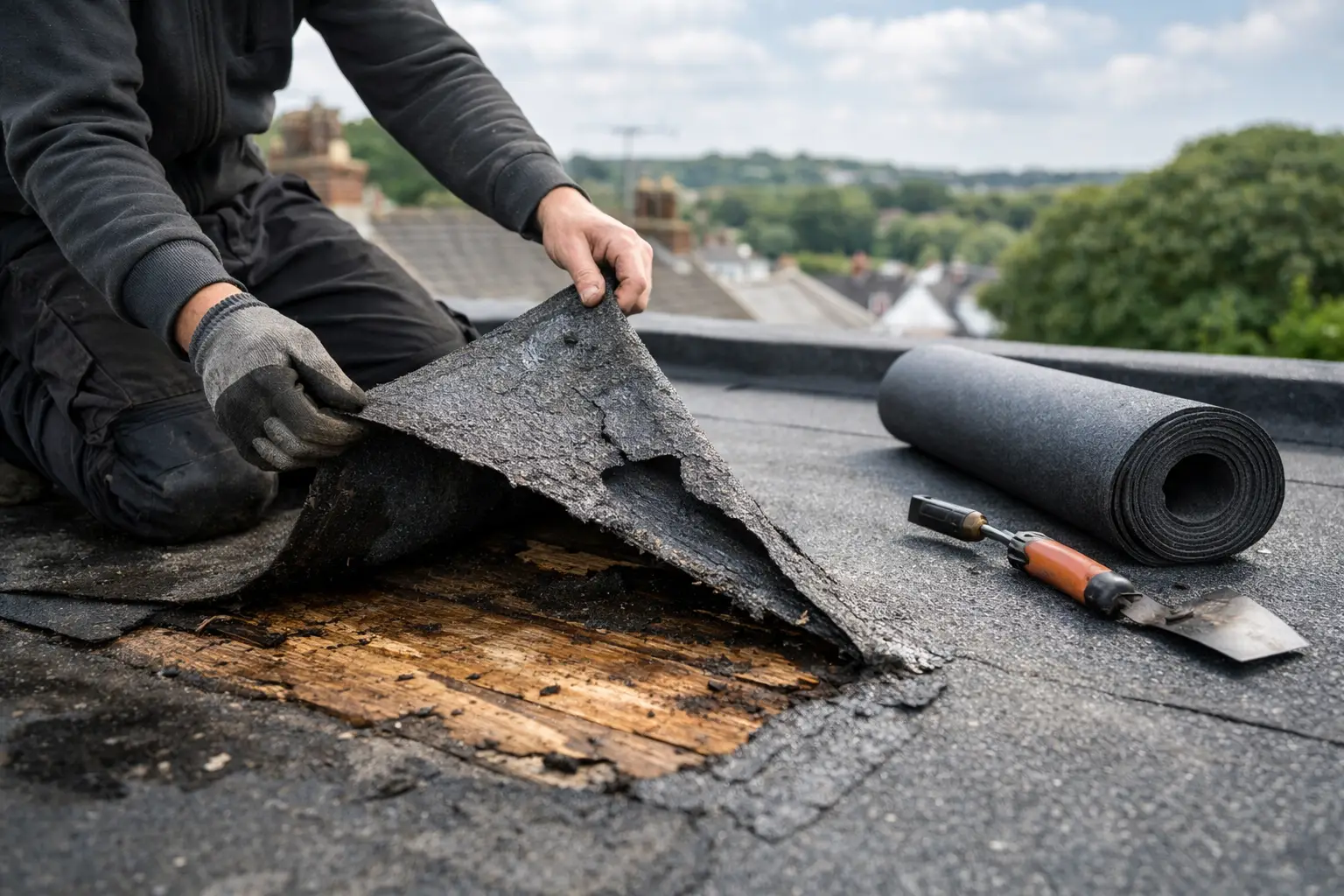
If an existing felt covering is still firmly bonded and generally sound, an overlay repair may be possible in some cases. It depends on the number of existing layers, the condition of the deck and whether trapped moisture is present. Covering over widespread blistering, soft areas or failed laps can simply hide a problem until it becomes more expensive to repair.
Plan the system, not just the rolls
A reliable felt roof is made from more than the membrane. Primers, adhesives, nails or fixings, edge trims, outlets and flashings all need to work together. Ordering rolls without allowing for these components is a common cause of delayed installation and improvised detailing.
Measure the roof area, then allow extra material for side laps, end laps, upstands and trimming at the perimeter. The amount needed varies by product and layout, so do not rely only on the stated coverage of a roll. On a simple rectangular roof the allowance may be modest, but it increases around corners, rooflights, pipes and changes of level.
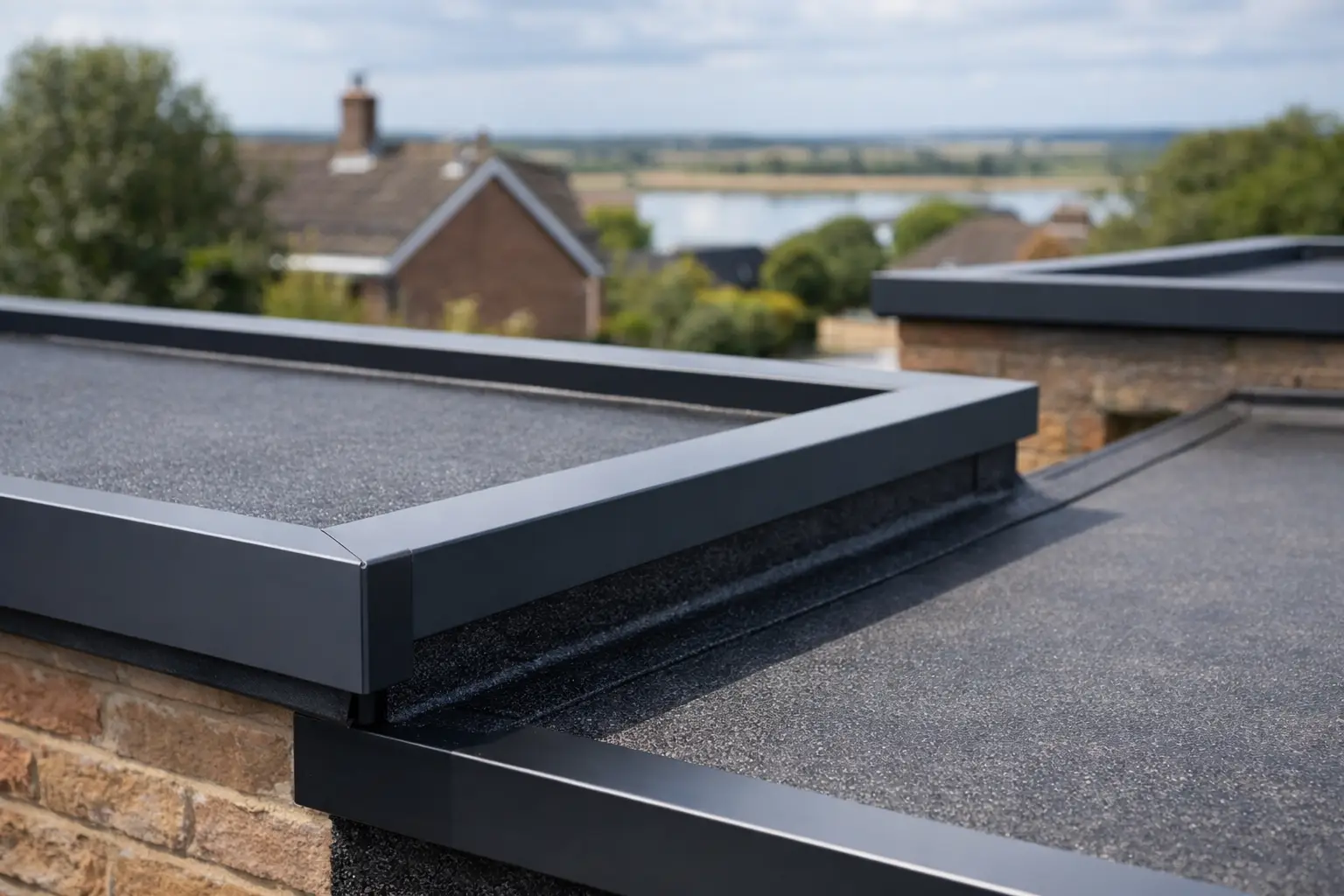
Roof edge trims deserve particular care. They help direct water into the gutter, support a clean roof edge and protect the exposed perimeter from wind lift. The trim profile must suit the roof construction and membrane thickness. Mixing incompatible trims, adhesives or felt products can make a straightforward installation harder than it needs to be.
Laps, upstands and vulnerable details
Most leaks occur at details rather than in the middle of a sheet. Side laps need to be consistent and fully bonded, while end laps should be correctly staggered to avoid creating a weak line across the roof. Any upstand should be taken high enough to prevent driven rain from reaching the edge of the waterproofing.
Pay close attention around pipes, vents, rooflights and outlets. These areas need purpose-made accessories or carefully formed membrane details, not a rushed cut and extra sealant. Sealant can support a proper detail, but it should not be relied on as the primary waterproofing method.
Installation conditions affect the result
Dry, stable weather gives roofing work the best chance of success. Applying felt over damp timber or attempting to bond materials in rain can trap moisture and weaken adhesion. Cold temperatures may also affect how self-adhesive products bond and how cold-applied materials cure.
Store rolls flat or upright as instructed, keeping them dry and protected before use. A roll that has been crushed, contaminated or left exposed can be difficult to install neatly. Unroll and position each length before bonding where possible, so cuts, overlaps and alignment can be checked without pressure.
For torch-on work, fire safety must be planned rather than treated as an afterthought. Keep suitable extinguishing equipment nearby, protect surrounding surfaces and inspect the work area after completion. Where there is any doubt about safe hot works, use a suitable alternative system or arrange professional installation.
When repair is enough and when replacement is wiser
Localised damage can often be repaired if the surrounding felt remains well bonded and the deck below is dry and sound. Small splits, damaged seams or isolated punctures may be addressed with a compatible patch, correctly lapped beyond the affected area.
Replacement is usually the better value choice when defects are widespread, the surface has become brittle across large areas or water has reached the deck. Repeated patching can extend the life of a roof for a time, but it can also create a surface with multiple joints and uncertain long-term performance. For trade professionals, a clean replacement often reduces return visits. For homeowners, it can provide clearer confidence in the finished roof.
Buying roofing felt rolls with confidence
Select felt by application method, intended layer and performance requirement, then check that all associated components suit the same roof system. A cheaper roll can become poor value if it is unsuitable for the deck, difficult to install in the available conditions or unsupported by compatible trims and accessories.
At Quality Roofing Supplies Ltd, the focus is on trade-quality materials that are straightforward to order for both professional installers and domestic projects. If you are uncertain about roll coverage, fitting method or the components needed around an edge or outlet, get the specification clear before work begins. A few careful checks before ordering are usually far easier than correcting a detail once the roof is covered.
Share This Article
Follow Us
Latest Articles
August 10, 2026
August 8, 2026
August 6, 2026
