
When Should Roofing Felt Be Replaced in the UK?

A felt roof rarely fails without giving some warning first. Small splits around edges, a patch of standing water after rain, or a ceiling stain below the roof can all point to a covering that is reaching the end of its useful life. Knowing when should roofing felt be replaced helps prevent a manageable maintenance job becoming damaged roof decking, wet insulation and a more expensive repair.
For garages, sheds, extensions, porches and other flat-roof areas, the right decision depends on the felt’s condition, how it was installed and whether the underlying roof structure remains dry and sound. Age matters, but it should not be the only factor.
When should roofing felt be replaced?
Roofing felt should be replaced when it is no longer providing a continuous, watertight surface or when repeated local repairs are unlikely to last. A single damaged area on an otherwise sound roof may be repairable. Widespread cracking, lifting seams or water getting beneath the felt usually means replacement is the more dependable option.
Traditional bitumen felt can often last around 10 to 20 years, depending on the quality of the material, the number of layers, exposure to sun and weather, drainage and installation standard. A well-installed, high-performance felt system may last longer. Conversely, a roof exposed to regular ponding water or movement in the deck can deteriorate much sooner.
It is sensible to inspect a felt roof at least twice a year, ideally after winter and again after periods of hot, dry weather. Also check it after storms, particularly where wind may have caught perimeter details or loosened edge trims.
Signs that felt has reached the end of its life
The clearest sign is an active leak, but water marks inside are not the first stage of failure. By the time water has travelled through the roof build-up, moisture may already be trapped beneath the covering. Look closely at the roof surface and at the edges, corners, outlets and upstands, as these are common weak points.
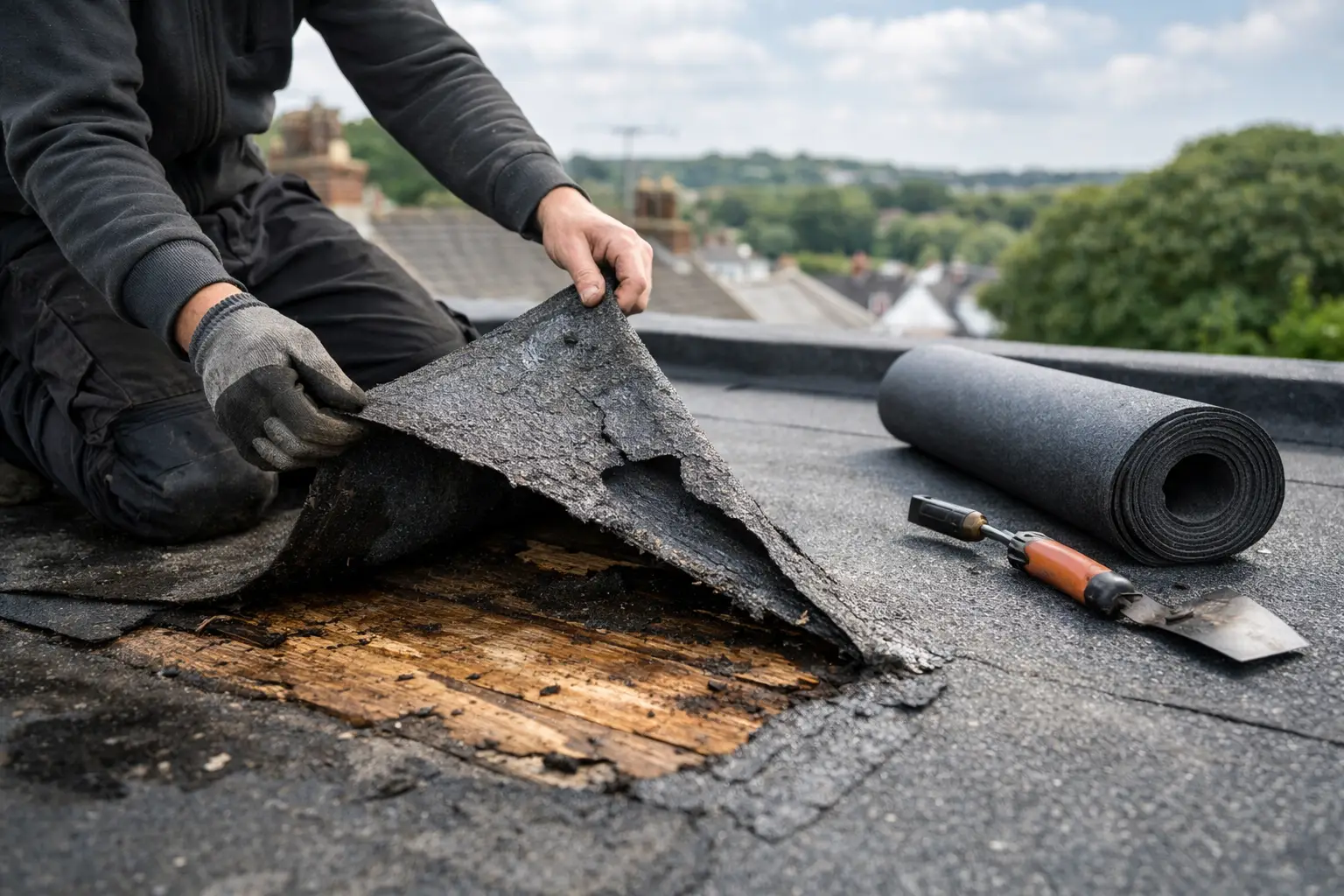
Cracking and crazing are typical signs of ageing felt. Fine surface cracks may initially look minor, but they can open with temperature changes and allow water into the layers below. If the felt feels brittle, has lost its protective mineral finish in large areas or tears easily, replacement should be planned rather than delayed.
Blisters and bubbles also need assessment. A small, stable blister does not always mean the whole roof has failed, especially if it remains intact and dry. However, widespread blistering can indicate trapped moisture, poor adhesion between layers or deterioration beneath the surface. Cutting open blisters without understanding the cause can make the problem worse, so this is usually a job for an experienced installer.
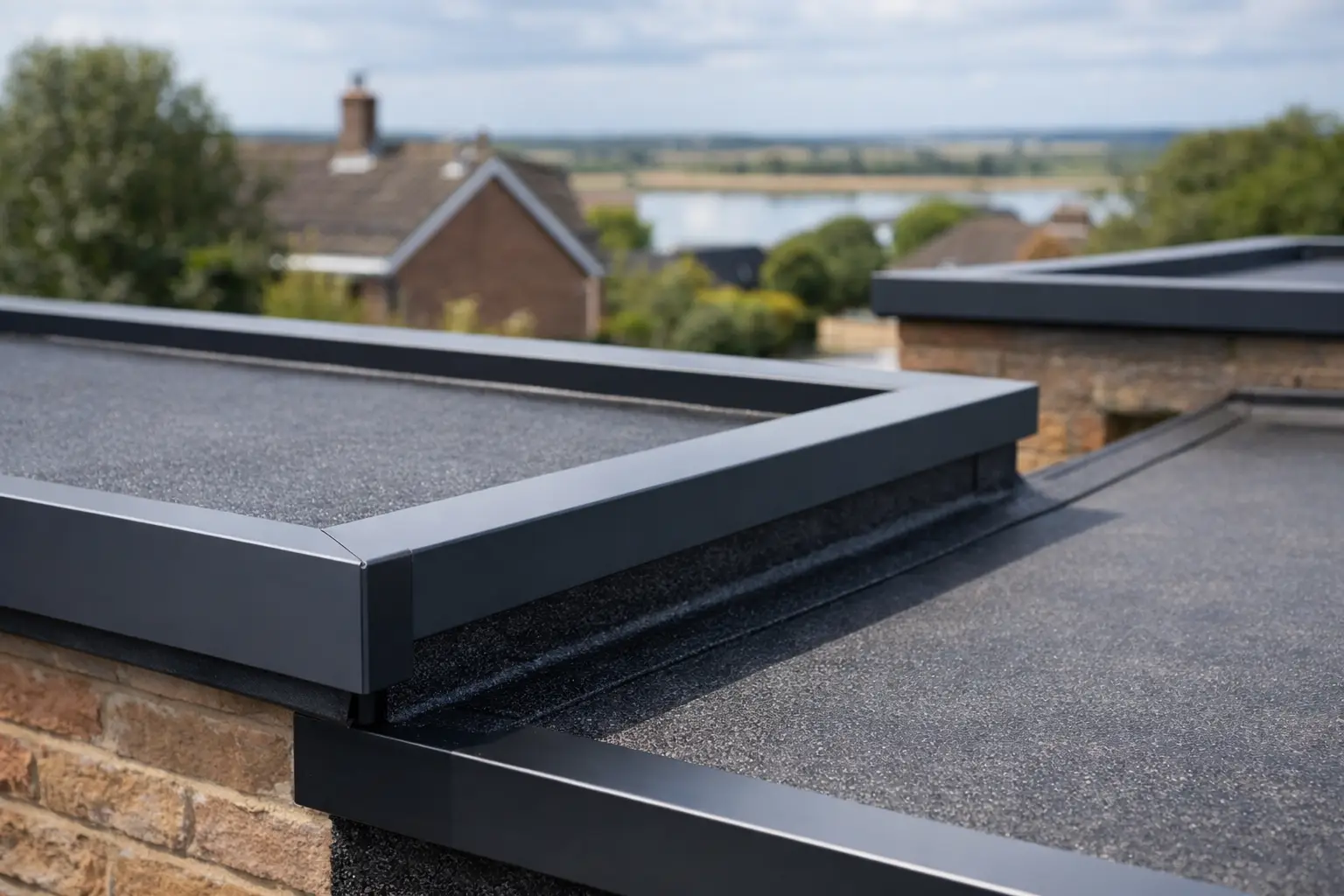
Pay close attention to laps and perimeter edges. Felt that is lifting, curling or separating at joints can allow driven rain underneath. Water may then travel some distance before appearing inside, making the source difficult to trace. Damaged or poorly secured roof edge trims can contribute to this issue, as they protect vulnerable felt edges from wind and direct water into the guttering.
Other warning signs include persistent ponding, soft or springy areas underfoot, moss growth where water sits, and visible sagging. A flat roof does not need to look perfectly dry immediately after rainfall, but water that remains for more than 48 hours in calm weather deserves investigation. Standing water accelerates wear and may point to inadequate falls or a blocked outlet rather than failed felt alone.
Repair or full replacement?
A targeted repair can be good value where damage is limited and the rest of the roofing felt remains flexible, well bonded and watertight. For example, a puncture caused by a dropped object, a failed joint around a penetration or a small split at one corner may be repaired with a compatible felt patch and suitable preparation.
The key word is compatible. New materials need to suit the existing roof covering and the repair area must be clean, dry and properly primed where required. Applying a patch over damp, loose or contaminated felt may hide the issue briefly, but it will not create a reliable seal.
Full replacement is normally the better route where repairs have become frequent, defects are spread across several areas or the felt is generally brittle and worn. It is also advisable if water has reached the roof deck or insulation. Re-covering over a damp or unstable base can trap moisture and shorten the life of the new system.
There is a cost trade-off. A repair has a lower immediate cost, while replacing the roof covering costs more upfront and may involve renewing trims, outlets and boards. Yet repeated call-outs and temporary patches can soon outweigh the cost of a properly specified replacement. For a property owner, the dependable choice is often to renew the roof before an internal leak causes wider damage.
Check the roof beneath the felt
Before deciding on replacement, inspect the structure as far as safely possible. From inside, look for staining, damp insulation, mould, timber discolouration or drips around joins. From above, avoid walking on a roof that feels soft, bouncy or visibly sagged. This can indicate weakened decking and presents a safety risk.
When old felt is removed, the deck should be checked for rot, delamination, movement and inadequate fixing. Any defective sections need replacing before new roofing felt is installed. The roof’s falls should also be considered at this point. If the roof does not direct water effectively to an outlet or gutter edge, even a new felt covering will face unnecessary stress.
Do not overlook ventilation where it forms part of the roof design. Condensation from within a building can mimic a roof leak and may affect the underside of a deck. The correct solution depends on the roof build-up, insulation position and use of the space below.
Choosing a replacement felt system
A replacement should be selected as a complete system rather than as a roll of felt in isolation. For many flat roofs, this means considering the underlay, cap sheet, adhesive or torch-on method, primers, corners, outlets and edge trims together. Each component affects waterproofing and finish quality.
Mineral-finished cap sheets are commonly used as the weathering layer because their surface helps protect the bitumen from ultraviolet exposure. The right specification will depend on the roof size, substrate, expected foot traffic, detail complexity and whether the work is a repair or a full renewal. A small garden building may need a different approach from a larger domestic extension or commercial outbuilding.
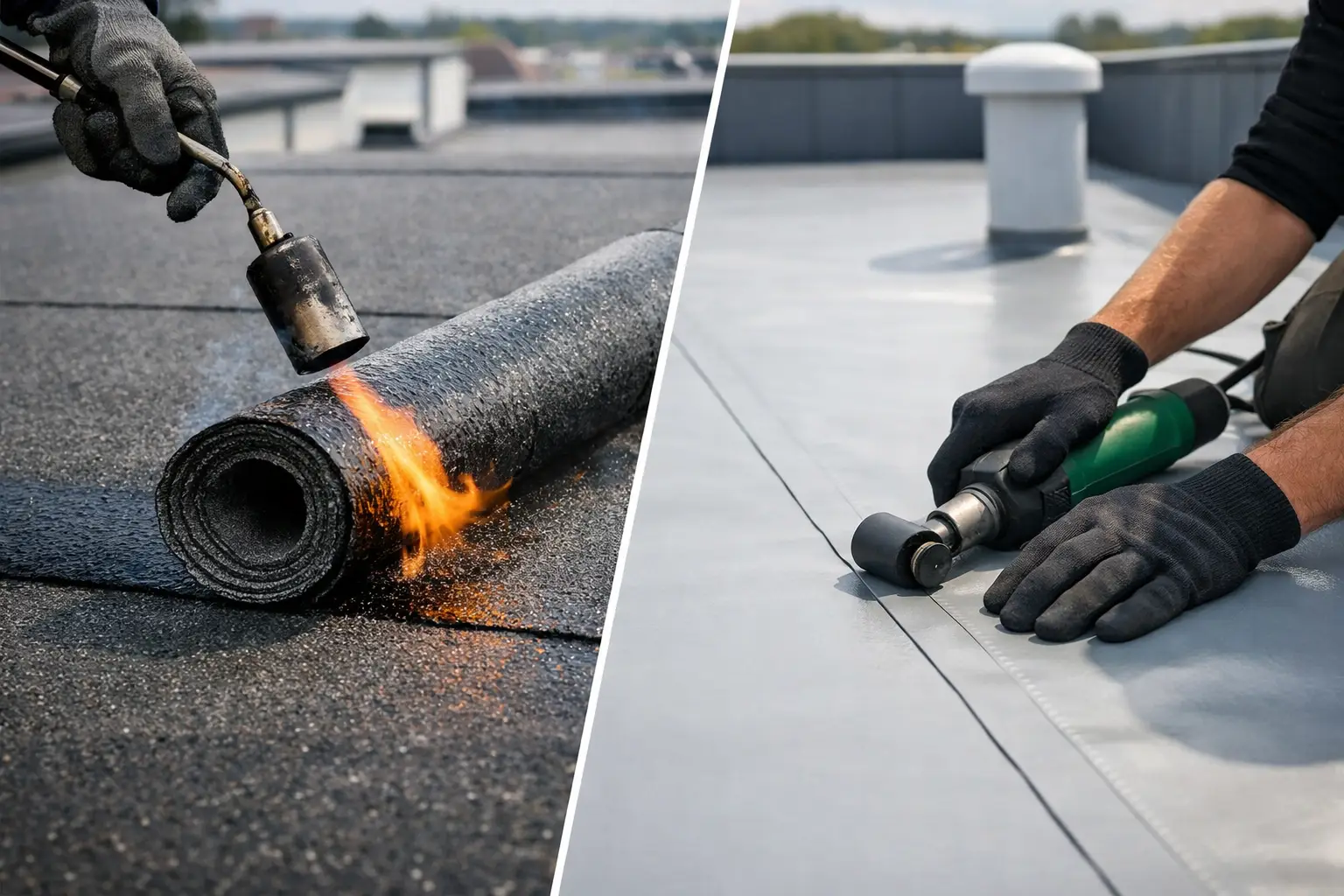
Installation method matters just as much as product quality. Torch-on felt requires suitable experience, safe working practices and careful attention around combustible materials. Cold-applied systems can be appropriate in certain situations, but they still need the correct preparation, temperature conditions and drying time. If there is any doubt, ask for practical product guidance before ordering rather than trying to make unsuitable materials work together.
Plan replacement before the leak worsens
Dry weather makes replacement easier, but a roof should not be left exposed while waiting for ideal conditions. Arrange the materials, trims and accessories before stripping the old covering, and protect the roof if work has to pause. Check forecast conditions, allow for safe access and keep rainwater outlets clear throughout the job.
For trade installers, a clear survey before ordering reduces delays on site. Measure the roof area, allow for laps and upstands, identify every edge detail and confirm whether the existing deck requires work. Homeowners should be equally cautious about measurements and compatibility, as an incorrect trim or insufficient felt can hold up a repair at the most inconvenient point.
If the roof is showing widespread wear, treat it as a planned replacement rather than waiting for the next heavy downpour to decide the timing. Quality Roofing Supplies Ltd can help you source trade-quality roofing felt, edge trims and accessories so the job can be completed with the right materials from the start.
Share This Article
Follow Us
Latest Articles
August 10, 2026
August 8, 2026
August 6, 2026
