
Roofing Felt Thickness Guide for Flat Roofs

A roofing felt thickness guide is useful when two rolls look similar but are designed to do very different jobs. A thinner underlay may form part of a reliable multi-layer system, while a thicker mineral-finished capsheet is intended to take the weather. Choosing solely by millimetres can lead to an unsuitable roof covering, poor detailing or a repair that does not last.
For flat roof work, felt thickness should be considered alongside the product’s reinforcement, finish, installation method and the rest of the roof build-up. The correct choice depends on whether you are repairing a small area, renewing a garage roof, fitting a new felt system or protecting a shed or outbuilding.
What roofing felt thickness actually means
Roofing felt thickness is normally stated in millimetres and refers to the finished depth of the membrane. In bituminous felt systems, the thickness comes from the bitumen coating, reinforcement carrier and surface finish. A 4 mm felt is therefore not simply a thicker version of a 2 mm product. It is often made for a different position within the system.
Thickness can contribute to puncture resistance, durability and the amount of bitumen within a membrane. However, it is only one measure of performance. The reinforcement matters just as much. Polyester-reinforced felt generally offers good flexibility and tear resistance, while glass fibre reinforcement can provide dimensional stability in suitable applications. The manufacturer’s stated use should always take priority over a comparison based on thickness alone.
The roof structure also affects the decision. A sound deck with proper falls, correctly formed edges and suitable outlets gives any covering a better chance of performing well. No felt thickness will compensate for standing water, movement in a weak deck or poorly sealed laps.
Common felt thicknesses and where they fit
Around 1 mm to 2 mm: lighter-duty felt and underlays
Lighter felt products are often used as underlays, separating layers or economical coverings for lower-demand applications. They are not usually intended to be the exposed weathering layer of a long-life flat roofing system.
In a built-up felt roof, an underlay can add another waterproofing layer and provide a suitable base for the capsheet. The final performance comes from the complete arrangement, not from treating the thinner membrane as a standalone finish. For a straightforward domestic outbuilding, the specification may be different from one required for a frequently used garage or extension.
Some lightweight felt is designed for cold application with adhesive or mechanical fixing. Others are intended for torch-on installation. These methods are not interchangeable, so check the product instructions before ordering accessories or starting work.
Around 2.5 mm to 3 mm: standard underlay grades
Felt around 2.5 mm to 3 mm is commonly used as a base or intermediate layer in multi-layer bituminous systems. It provides more substance than a lightweight felt while remaining suited to its supporting role beneath a weathering sheet.
For many flat roof renewals, this type of underlay is paired with a heavier mineral-finished capsheet. The underlay helps build a more dependable waterproof barrier, particularly where the roof is likely to see regular weather exposure. It should be lapped and bonded in line with the system guidance, with extra care around corners, pipe penetrations and roof edges.
A thicker underlay does not remove the need for a proper top layer. Where the roof will be exposed to sunlight and rain, the capsheet still provides the primary external protection.
Around 4 mm: mineral capsheets for exposed surfaces
A 4 mm mineral felt is a common choice for the top layer of a built-up flat roofing system. The mineral finish helps protect the bitumen from ultraviolet light and gives the roof a durable exposed surface. These products are generally selected for garages, porches, extensions, workshops and similar flat roof areas, subject to the manufacturer’s specification.
The mineral surface is not just cosmetic. It helps reduce degradation caused by sunlight, which is why an exposed roof should not usually be finished with plain underlay felt. Mineral capsheets are available in different colours, allowing the finished roof to suit the surrounding property where appearance matters.
A 4 mm capsheet is often a practical balance between handling, durability and cost. It is widely used, but it still needs the right substrate, suitable primer where required, correct lap treatment and compatible edge trims.
Around 4.5 mm and heavier: demanding roof areas
Heavier capsheets may be specified where increased durability, tougher reinforcement or a particular system warranty is needed. They can be useful on larger roof areas, roofs exposed to harsher conditions or locations that may receive occasional maintenance foot traffic.
That does not mean the thickest felt is automatically the best buy. Heavier material costs more, can be less forgiving around tight details and may not match the rest of an existing system. If you are matching into a repair, compatibility with the original roof covering is more valuable than adding a thicker membrane at one isolated point.
Choosing the right felt build-up
For a lasting result, think in terms of a roof system rather than a single roll. A typical built-up approach uses a base layer or underlay and a weathering capsheet, with compatible primer, adhesive or torch-on bonding method. The exact number of layers and the correct products depend on the deck, roof size, exposure and the manufacturer’s instructions.
When deciding what to buy, establish whether you are covering a new deck or repairing an existing felt roof. A local repair may only need a compatible patch and surface dressing, while a roof that has widespread cracking, failed laps or trapped moisture may need a fuller renewal. Adding fresh felt over a damp or unstable surface is likely to create more problems later.
Also consider the roof’s use. A small storage building with limited exposure may suit a more economical specification. A domestic extension or garage roof generally calls for a more substantial system, correctly finished with edge trims and drainage details. If there is any uncertainty, it is worth checking the product data before ordering rather than relying on a roll’s appearance.
Thickness is not a substitute for good detailing
Most felt failures begin at details, not in the middle of the roof. Edges, laps, upstands, outlets and penetrations are the points most likely to let water in if they are rushed. A well-selected 4 mm capsheet can still fail early if the lap is poorly bonded or water can track behind an edge trim.
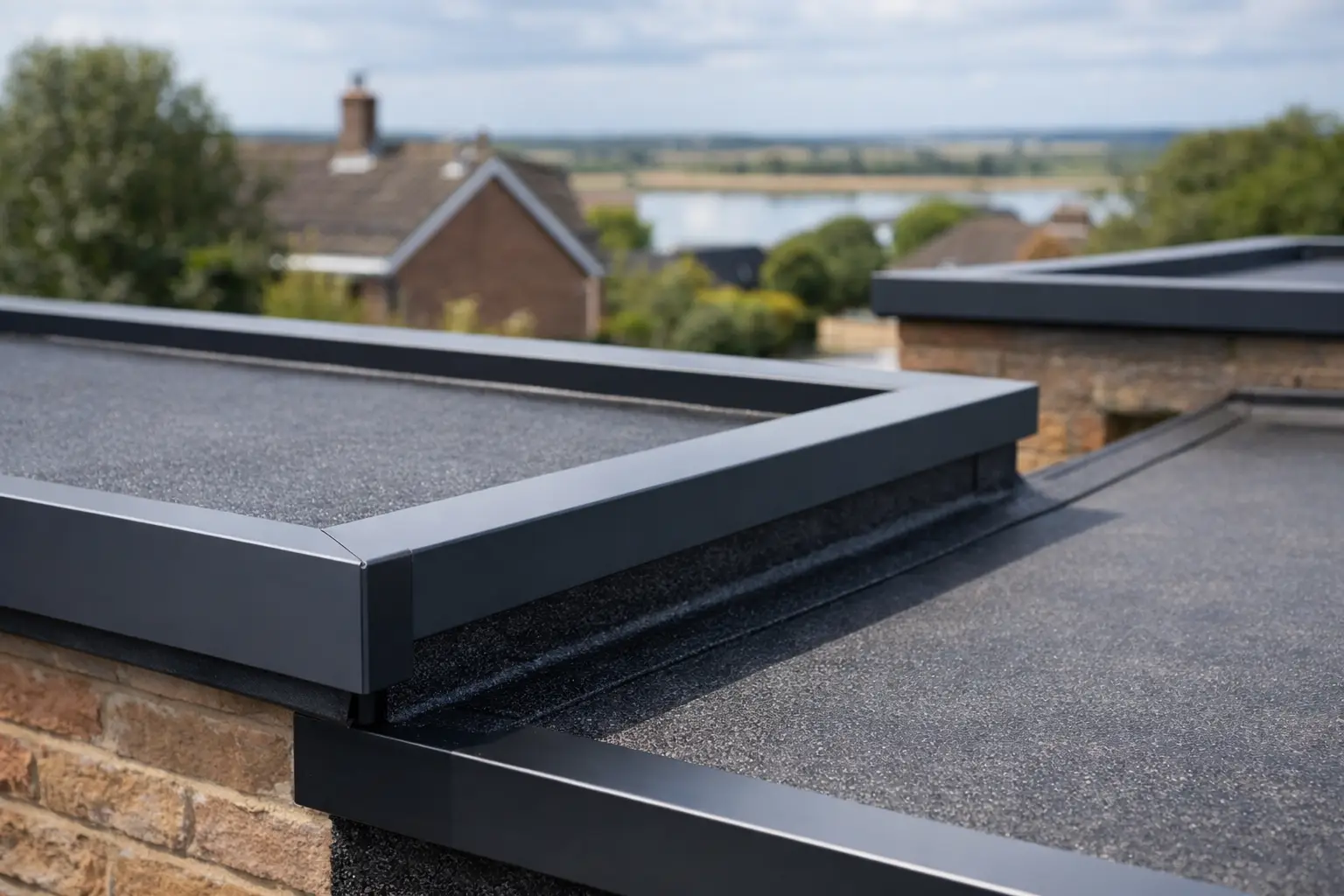
Roof edge trims should be compatible with the covering method and fitted to create a clean, weatherproof finish. On a flat roof, water must be guided towards suitable drainage rather than allowed to sit against a perimeter. Check that the deck has adequate fall before laying a new system, especially when replacing old coverings that have visibly ponded.
Where a roof surface will be walked on for regular access, a standard mineral felt finish may need additional protection. Use designated walkways or a system specifically intended for the expected traffic. Repeated footfall can scuff mineral surfaces and stress laps, regardless of felt thickness.
Torch-on, cold-applied and self-adhesive felt
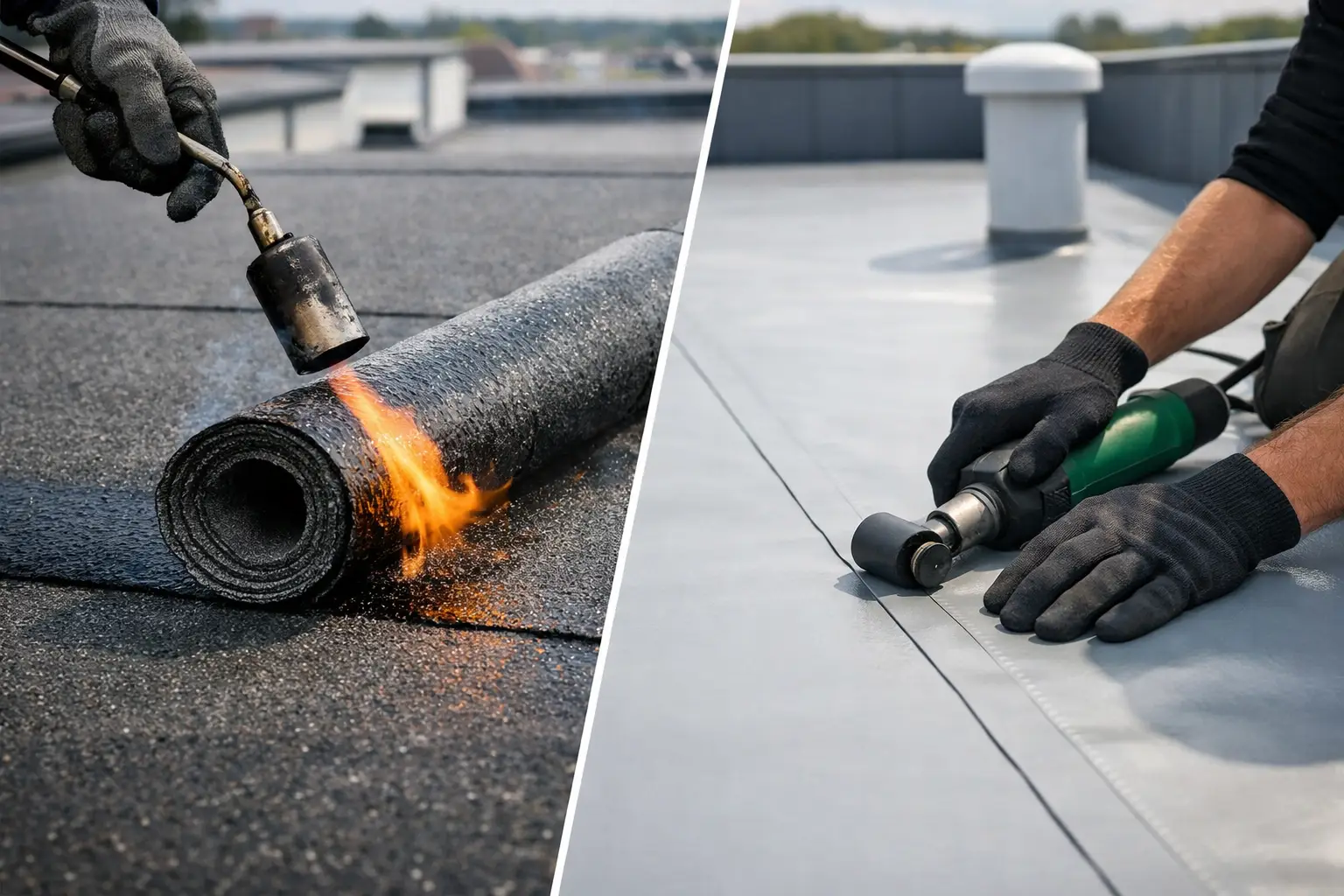
The installation method affects which thicknesses and products are suitable. Torch-on felt is widely used for professional flat roofing because heat bonds the membrane to the prepared surface and seals laps effectively when applied correctly. It requires suitable fire precautions, a compatible substrate and experienced handling. It is not a casual job for anyone unfamiliar with hot works.
Cold-applied systems can be a practical option where naked flame is unsuitable. They rely on compatible adhesives, clean dry surfaces and careful pressure at laps. Self-adhesive felt can simplify smaller projects, but its performance still depends on temperature, substrate preparation and following the stated installation conditions.
Do not mix products from unrelated systems without checking compatibility. Bitumen types, adhesives, primers and surface finishes can react differently or fail to bond as expected.
A practical buying check before you order
Before choosing roofing felt, confirm the roof area, deck type, existing covering, required installation method and whether the roll is an underlay or exposed capsheet. Allow for side laps, end laps, upstands and waste around awkward shapes. Ordering only the roof’s measured square metres can leave you short before the final detail is complete.
It is also sensible to order the matching accessories at the same time: primers where specified, compatible adhesive or bonding materials, edge trims, outlets and fixings. These are not minor extras. They help turn suitable felt into a finished roof system.
Quality Roofing Supplies Ltd can help make the selection more straightforward when you need trade-quality materials for a repair or new flat roof project. Start with the job the felt must do, then select the thickness and system components designed to do it properly.
Share This Article
Follow Us
Latest Articles
August 8, 2026
August 6, 2026
August 4, 2026
