
Flat Roof Trim Corners Explained
A flat roof edge can look straightforward until you reach the corners. That is usually where small fitting mistakes start to show, whether it is a poor finish, a weak joint or a section that never quite lines up. Flat roof trim corners are there to solve that problem properly, giving the perimeter a cleaner finish and helping the roof edge perform as it should.
For trade installers, corners save time and help keep detailing consistent across the job. For homeowners and self-build customers, they remove a lot of the guesswork from ordering and fitting edge trims. If you are planning a flat roofing project, it is worth understanding what these components do, how they differ, and why choosing the right type matters.
What flat roof trim corners actually do
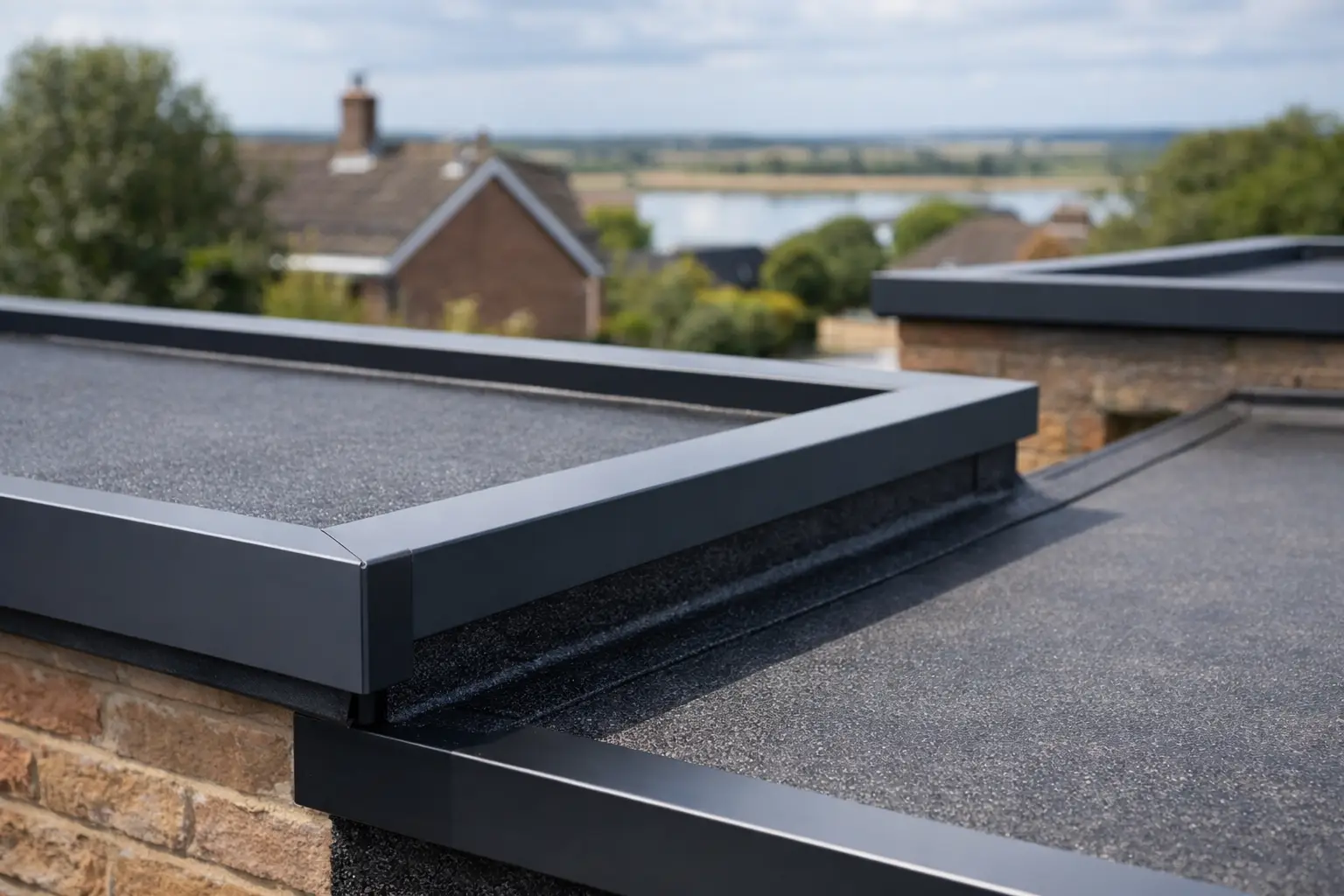
Flat roof trim corners are pre-formed corner pieces designed to match the profile of a roof edge trim system. Instead of trying to cut and join straight lengths neatly at 90 degrees, you use a purpose-made internal or external corner to continue the trim around the roof perimeter.
That matters for two reasons. First, the corner is one of the most exposed parts of the roof edge. It has to deal with water runoff, wind exposure and movement in the trim line. Second, it is one of the first details people notice. Even if the rest of the roof is fitted well, a badly formed corner can make the whole job look unfinished.
A proper corner piece helps create a more secure connection, supports better water management and gives a much cleaner appearance than a cut-and-bonded improvised corner. On many installations, it also makes fitting faster because the profile is already formed to suit the trim.
Why corners are not just a finishing extra
It is easy to think of corner pieces as cosmetic, especially on smaller domestic jobs. In reality, they are part of the edge protection system. Roof trims are designed to protect the perimeter of the roof covering, support drainage off the edge and reduce the risk of water finding its way into vulnerable points.
The corners are often where stress is concentrated. If the trim profile is forced into shape on site or cut inaccurately, you can end up with gaps, uneven pressure on the roofing material or weak junctions that are more likely to fail over time. That does not mean every hand-formed corner will fail, but it does mean the margin for error is much smaller.
Using the correct corner piece is usually the more dependable approach, particularly where appearance, speed and long-term durability all matter.
Types of flat roof trim corners
Internal corners
Internal corners are used where two roof edges meet in an inward angle. You will often find these on more complex roof layouts, extensions or roof areas that wrap around a wall or raised section. The corner piece allows the trim to continue through the change in direction without interrupting the profile.
External corners
External corners are the more common option on standard flat roof perimeters. They are used where the trim turns around an outward 90-degree edge. On a simple rectangular roof, these are typically the corners you will need.
Profile-specific corners
Not all corners fit all trims. Flat roofing trims come in different profiles and dimensions, and the matching corner has to be made for that exact system. If the profile does not match, the joint will not sit correctly, and you can run into problems with alignment, fixing and overall finish.
This is one of the most common causes of ordering mistakes. A corner may look close enough in a product image, but if it is intended for a different trim type, it is unlikely to perform properly on site.
Choosing the right flat roof trim corners
The first thing to check is the trim system you are using. Corners should match the profile, size and manufacturer specification of the straight trim lengths. Mixing systems can create fitting issues even when dimensions appear similar.
After that, think about the roof layout itself. A basic square or rectangular roof may only need external corners. More detailed layouts can require a mix of internal and external corners, and it is better to work that out before ordering rather than trying to patch the design on installation day.
Material and finish also matter. If the rest of the trim system is designed for durability and weather resistance, the corners need to offer the same standard. A corner piece is not the place to compromise, because it is one of the highest-visibility parts of the edge detail and one of the areas most exposed to the weather.
For domestic customers, the simplest route is usually to match every accessory to the chosen trim system from the outset. For trade buyers, it still pays to double-check profile compatibility before placing an order, especially if you are replacing part of an existing edge detail rather than fitting a completely new perimeter system.
Installation points that make a difference
Flat roof trim corners are designed to make fitting easier, but they still need to be installed carefully. Good results depend on setting out the trim line accurately, fixing the corner securely and ensuring the adjoining straight lengths align cleanly into it.
The roof edge needs to be prepared properly first. If the substrate is uneven, weak or out of line, the corner will not sit as intended. That can affect both appearance and performance. It is also important to follow the trim system’s fixing guidance, including any recommendations for jointing, sealant use and spacing of fixings.
One practical benefit of pre-formed corners is consistency. On larger jobs, that consistency helps maintain a professional finish across the whole perimeter. On smaller jobs, it reduces the chance of one awkward corner holding up the rest of the work.
That said, there can be some variation between roof designs. A standard 90-degree corner piece works well when the structure is true, but older buildings and refurbishment projects are not always perfectly square. In those cases, some adjustment on site may still be needed, and it is worth allowing for that in both time and material planning.
Common mistakes to avoid
The biggest mistake is treating corners as an afterthought. If they are left off the materials list, installers are often forced to improvise on site. That can cost more in labour than the correct part would have cost in the first place.
Another common issue is ordering by appearance rather than specification. Similar-looking trim accessories are not always interchangeable. If the corner profile does not match the straight trim exactly, the result can be poor alignment and a visibly untidy edge.
It is also worth checking quantities carefully. Roof plans that seem simple at first glance can include additional changes of direction, particularly around upstands or extensions. Missing a corner can delay the job if you are waiting for replacement parts.
For anyone fitting a roof for the first time, the safest approach is to confirm compatibility before ordering. A dependable supplier should be able to help you match trims and corners correctly without making the process more complicated than it needs to be.
When quality matters most at the roof edge
The roof perimeter does a lot of work. It supports the finish of the roofing system, protects exposed edges and contributes to the overall look of the installation. Corners play a bigger part in that than many buyers expect.
If you are working on a trade job, reliable corner components help keep the installation moving and reduce the risk of callbacks for edge detailing issues. If you are a homeowner buying materials yourself, they offer a straightforward way to get a neater, more professional result without relying on site-made workarounds.
This is where product quality and compatibility really count. A trim corner that fits properly, finishes cleanly and is made to stand up to real weather exposure is a practical investment, not an optional extra. That is why specialist suppliers such as Quality Roofing Supplies Ltd focus on trade-quality roofing components that are simple to order and suited to real installation conditions.
Flat roof trim corners and the bigger picture
A good flat roof detail is rarely about one component on its own. It is about how each part works together, from the roof covering to the edge trims and the corners that join the system neatly around the perimeter. Get the corners right, and the whole roof edge tends to look sharper, fit better and inspire more confidence.
If you are ordering for an upcoming project, take a few extra minutes to check the trim profile, count each corner properly and match the accessories to the system. It is a small step that can make the finished roof look far more considered from every angle.
Share This Article
Follow Us
Latest Articles
August 10, 2026
August 8, 2026
August 6, 2026
