
How to Prevent Flat Roof Leaks

A flat roof rarely starts leaking without warning. More often, the signs show up earlier – standing water after rain, lifting edges, cracked sealant around a roof light, or a small split that has been ignored for too long. If you are looking at how to prevent flat roof leaks, the real answer is not one quick fix. It comes down to good design, compatible materials, careful installation and regular maintenance.
That applies whether you are working on a garage, extension, porch, dormer or commercial area. A flat roof is only as reliable as its weakest detail, and most leaks begin at joints, penetrations, edges or outlets rather than in the middle of the field area.
How to prevent flat roof leaks from the start
Prevention starts before the first component goes down. If the roof has poor falls, weak edge detailing or mismatched materials, you are already increasing the risk of water ingress. A lot of leak problems blamed on the membrane are actually design or finishing issues.
One of the first things to get right is drainage. Flat roofs are not meant to hold water for long periods. In practice, some minor surface water may remain after rainfall, but persistent ponding puts more stress on the covering, increases dirt build-up and can shorten the service life of the system. Good falls towards outlets matter, and so does making sure those outlets are sized and positioned properly.
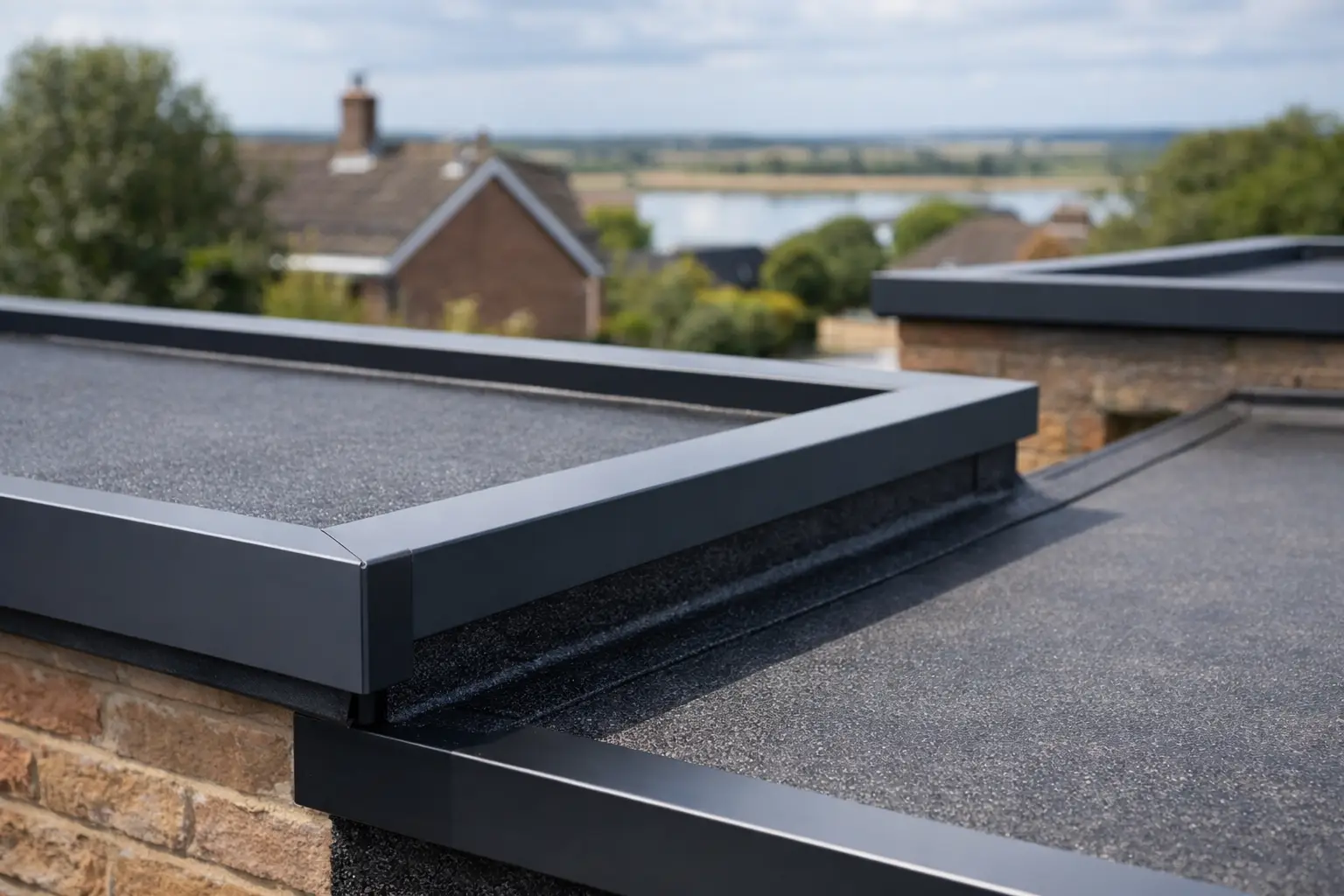
The next point is edge and perimeter detailing. Roof edges take a lot of exposure from wind and rain, and if trims are poorly fixed or the terminations are weak, water can track underneath. Using purpose-made flat roofing trims and compatible edge components helps keep the roof sealed where movement and weather pressure are highest.
Penetrations also need attention. Roof lights, vents and other upstands are common leak points because they interrupt the roof covering. The detailing around them needs to be watertight, mechanically secure where required, and suitable for the roofing system being used. A well-installed roof light with the correct upstand and flashing details will always outperform a rushed retrofit with improvised sealing.
The main causes of flat roof leaks
If you want to stop leaks, it helps to understand where they usually come from. Age is one factor, but not the only one. Even a relatively new roof can fail early if the installation has been rushed or the wrong accessories have been used.
Poor drainage is a major cause. When water sits on the surface, it finds weaknesses over time. That might be a seam, a pinhole, a cracked surface finish or a detail around an outlet. Blocked gutters and rainwater outlets make this worse, especially through autumn and winter when leaves and debris build up quickly.
Movement is another issue. Flat roofs expand and contract with changes in temperature, and the materials around the perimeter and penetrations move too. If trims, joints and sealants are not designed to accommodate that movement, they can split or pull away.
Then there is simple wear and tear. UV exposure, foot traffic, trapped moisture beneath the system and impact damage can all reduce performance. On domestic roofs, damage often happens during unrelated work such as window cleaning, aerial installation or maintenance to adjoining areas.
Choosing the right materials matters
Not all flat roofing products perform the same way, and not every accessory suits every system. One of the most common mistakes is treating the roof as if the main covering is the only thing that matters. In reality, the supporting products often decide whether the roof stays watertight.
Good-quality roofing felt, trims, sealants, outlets and edge details all need to work together. Compatibility matters because different products can react differently to weather, movement and adhesives. Saving a small amount upfront on lower-grade components can lead to a much bigger repair bill later.
For trade buyers, this is often about reducing call-backs. For homeowners, it is about avoiding the frustration of paying twice. The most dependable approach is to choose trade-quality materials designed for flat roof use, rather than trying to adapt general-purpose products that were never intended for long-term exposure.
Roof edge trims are a good example. They are not just there to make the roof look neat. They help control water run-off, protect the perimeter and support the roof covering at vulnerable edges. If the trim is flimsy, badly fitted or unsuitable for the roof build-up, that edge can become a failure point very quickly.
How to prevent flat roof leaks with regular checks
Even a well-built roof needs occasional inspection. That does not mean constant maintenance, but it does mean checking the roof often enough to catch problems before they become internal leaks.
For most flat roofs, a visual inspection in spring and autumn is sensible, with an extra check after heavy rain, high winds or snow. You are looking for obvious changes – pooling water that lingers, blisters, splits, open laps, loose trims, cracked sealant and debris around outlets.
Small issues are easier and cheaper to deal with early. A blocked outlet is straightforward to clear. A loose edge detail can often be secured before water gets under it. Once moisture has entered the roof structure or started affecting internal finishes, the job becomes more disruptive.
Foot traffic should also be managed. Flat roofs are sometimes treated as convenient access platforms, but repeated traffic can wear the surface and damage vulnerable details. If access is necessary for maintenance of other building elements, that should be considered as part of the roof design.
Pay close attention to roof lights and other details
Flat roof leaks often appear near roof lights, but the roof light itself is not always to blame. The issue is often in the surrounding detail – poor upstand height, weak sealing, bad corners or water sitting against the frame.
A properly specified roof light should be suitable for the roof type, and the surrounding membrane or felt detail should be installed neatly and securely. There also needs to be enough upstand to reduce the risk of driven rain and splashback causing problems.
The same principle applies to vents, pipes and other penetrations. Every opening through the roof is a place where water can get in if the detailing is poor. These areas need careful workmanship and the right accessory pieces, not improvised patching.
Repair early, but know when repair is not enough
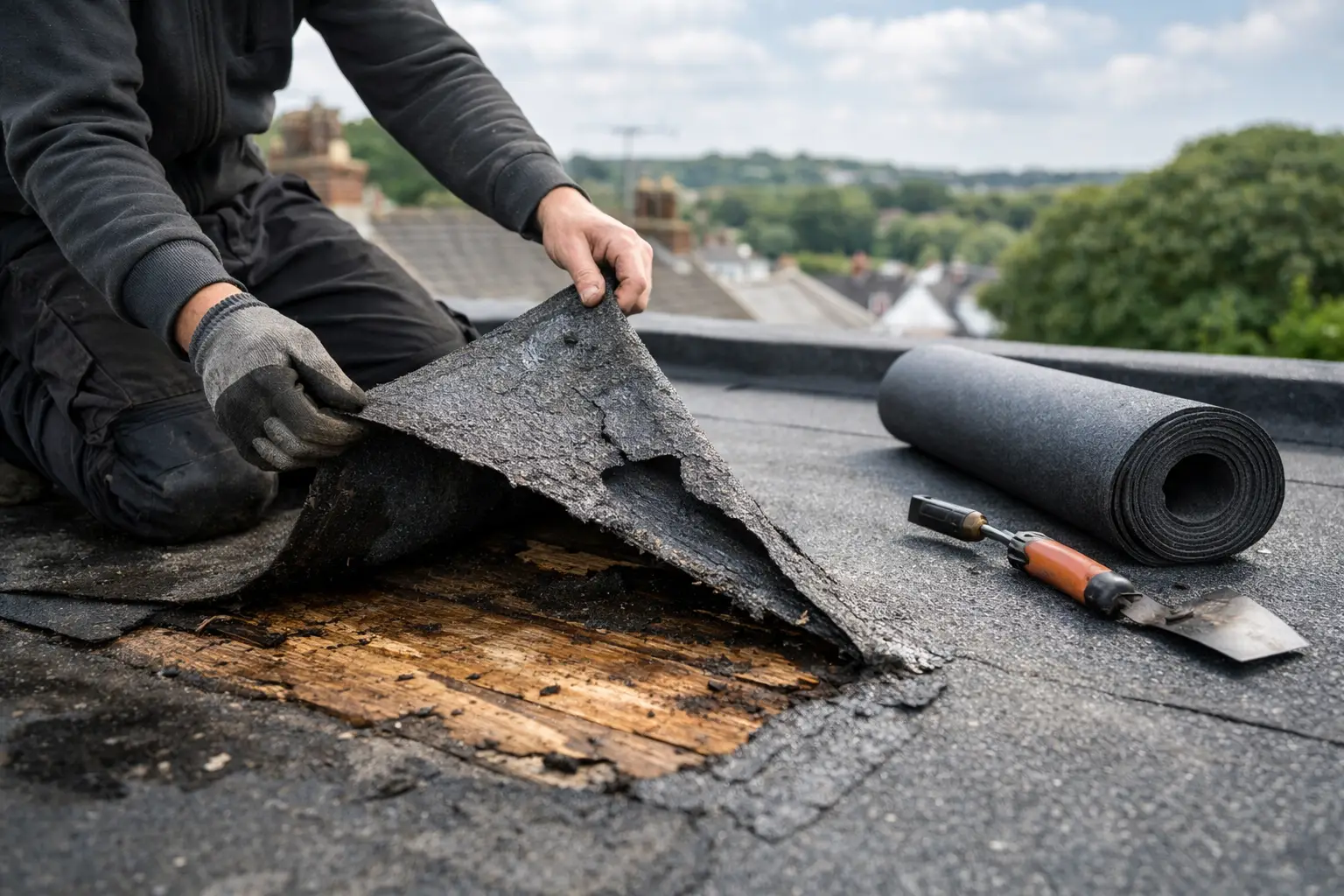
Preventing leaks does not always mean replacing the whole roof. In many cases, local repairs make sense if the roof is otherwise in sound condition. A split in a small area, failed sealant around a detail or a damaged trim section can often be resolved without major replacement work.
That said, repair is not always the best long-term answer. If multiple details are failing, if the roof has widespread ponding, or if the covering is nearing the end of its service life, patching one area may simply delay a bigger problem. It depends on the age of the roof, the condition of the substrate and how extensive the defects are.
For contractors, that judgement comes down to balancing cost, durability and risk. For homeowners, it is usually worth getting advice before spending money on repeated short-term repairs. A more complete refurbishment with the right trims, felt and accessories can be better value over time.
Good installation is still the biggest factor
You can use quality materials and still end up with leaks if the installation is poor. Flat roofing is detail-sensitive work. The joins need to be sound, the edges need to be finished properly, and the roof needs to shed water as intended.
That is why product choice and workmanship should go together. Trade-standard components help, but they need to be fitted correctly and in line with the roof system requirements. If there is any uncertainty around compatibility or the right detail for a particular roof layout, it is worth checking before ordering and installing.
For many buyers, that practical support is just as useful as the products themselves. Quality Roofing Supplies Ltd works with both trade and domestic customers who want straightforward access to reliable flat roofing materials without unnecessary guesswork.
A flat roof does not need to be a problem area. If the falls are right, the detailing is sound, the materials are compatible and the roof is checked before minor faults become major ones, leaks are far less likely. Most prevention is not complicated – it is simply about doing the basics properly and not leaving weak points to chance.
Share This Article
Follow Us
Latest Articles
August 10, 2026
August 8, 2026
August 6, 2026
