
What Flat Roof Trim Do I Need?
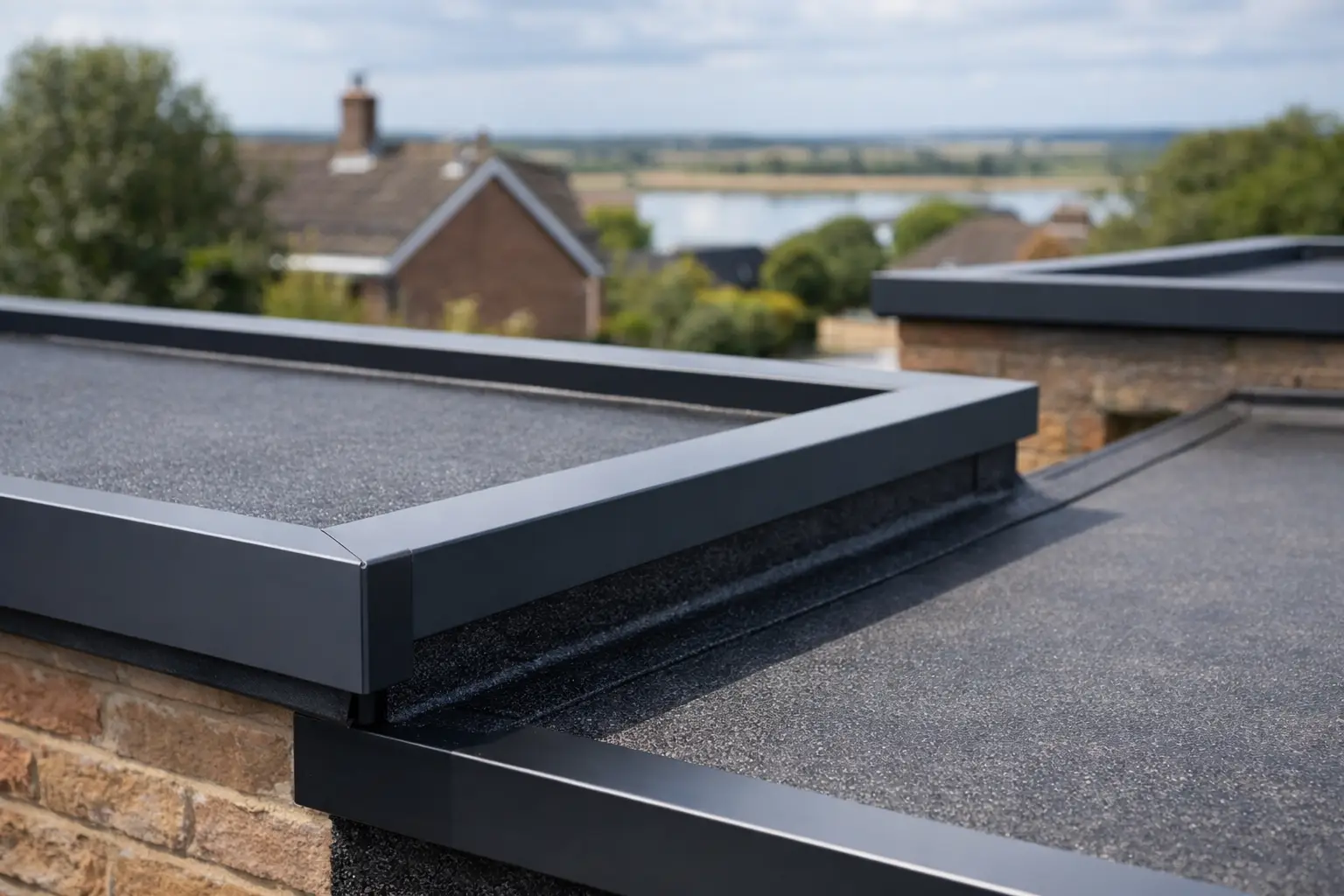
If you are asking what flat roof trim do I need, the answer usually comes down to one thing – where the edge of the roof sits and what that edge needs to do. A flat roof trim is not just there to tidy up the perimeter. It helps control water runoff, protects exposed edges, supports the membrane system and gives the roof a clean, durable finish.
That means there is no single trim that suits every flat roof. A felt roof on a garage, a GRP roof on an extension and a single ply installation on a larger building can all need different edge details. The right choice depends on the roofing system, the deck edge, whether water is draining into a gutter and how the membrane is being terminated.
What flat roof trim do I need for my roof edge?
Start by looking at each side of the roof separately. One edge may need a drip trim to send water into a gutter, while another may need a raised edge trim to stop water blowing over the side. Corners and upstands may then need matching trims or termination bars to complete the detail properly.
In practical terms, most flat roofs use a combination of trims rather than one product all the way round. That is where many buying mistakes happen. People measure the perimeter, order one trim profile and then realise the roof has different edge conditions.
Drip trims
A drip trim is normally used where rainwater needs to shed cleanly off the roof edge into a gutter. The profile projects the water away from the fascia and helps prevent staining, timber saturation and untidy runoff. On many domestic flat roofs, this is the trim used on the lower edge where the roof falls.
If your roof has a clear drainage side and a gutter directly below, a drip trim is often the right starting point. The exact profile still depends on the membrane system being used and the thickness of the roof build-up.
Edge trims
Edge trims are commonly fitted to the sides and higher edges of a flat roof. Their main job is to contain the roof covering at the perimeter and create a neat, weather-resistant finish. On some systems they also help reduce the risk of wind uplift by securing the membrane edge firmly.
These trims usually have a taller face than a drip trim. If the side of the roof does not discharge into a gutter and needs a more upstanding finish, an edge trim is usually more suitable.
Kerb edge and raised perimeter trims
Where the roof perimeter sits against a raised detail, or where extra protection is needed at the edge, a kerb-style trim may be required. These are more common when dealing with roof lights, perimeter upstands or specific waterproofing layouts.
This is one of those areas where it depends on the build detail. If the membrane is turning up against a vertical surface, the trim requirement is different from a free-draining outer edge.
Termination trims and bars
A termination trim or bar is used where the membrane finishes against a wall or upstand rather than wrapping over an exposed roof edge. It mechanically secures the top of the membrane and allows the joint to be sealed against water ingress.
If part of your flat roof runs into brickwork, render or another vertical surface, you may need a termination detail as well as perimeter edge trims. It is a small component, but it matters.
Matching the trim to the roofing system
The next question is not just what flat roof trim do I need, but what trim works with the roof covering I am fitting. Different systems finish differently at the edge, and trims are not always interchangeable.
Felt roofing
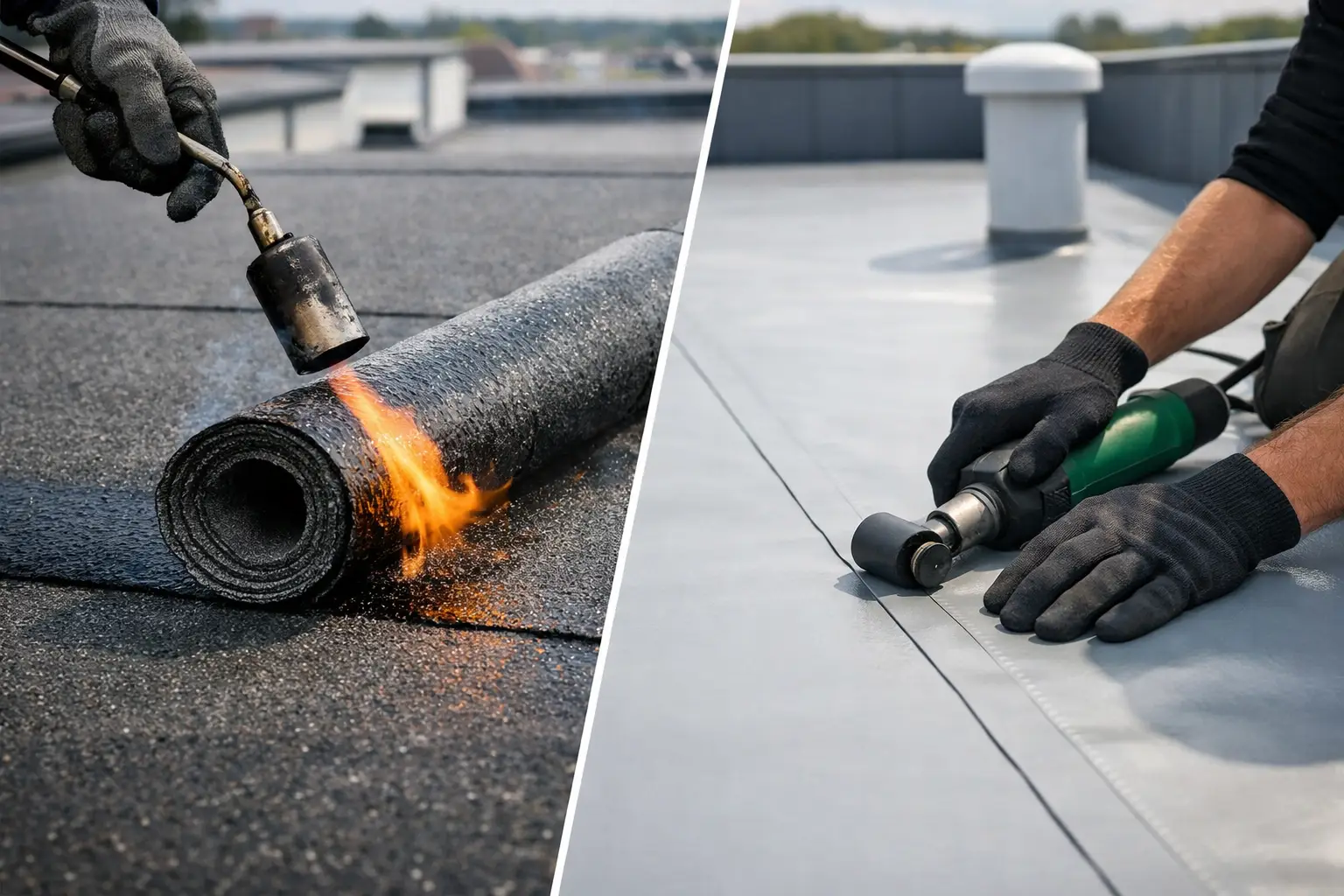
On felt roofing systems, trims are often used to support the edge and give the mineral cap sheet or built-up felt a defined finish. Depending on the system, the trim may be fixed first and then the felt dressed over, or installed as part of a multi-part edge detail.
With felt, the detail needs to be secure and weather-tight without creating weak points at the edge. Cheap or thin trims can be a false economy here, especially on exposed sites.
GRP roofing
GRP roofs usually use purpose-made fibreglass-compatible trims in clearly defined profiles. These often include drip trims, raised edge trims and corner pieces designed to work as part of the full GRP system. They are shaped to control resin and matting at the edge and to create a consistent finish.
If you are fitting a GRP roof, it is generally best to use the trim range intended for that system rather than trying to adapt a generic profile.
Single ply and other membranes
Single ply and other membrane systems often rely on edge trims that clamp or mechanically secure the membrane while providing wind-resistant perimeter detailing. These may be aluminium trims with matching fixings and jointing pieces.
Here, compatibility matters more than appearance alone. A trim that looks right but does not suit the membrane or fixing method can create problems later.
Getting the size right
Once you know the trim type, sizing is the next step. This is where roof build-up matters. The trim has to suit the deck thickness, insulation arrangement where relevant, and the finished height of the roof covering.
If the face is too shallow, the edge may look unfinished or leave vulnerable areas exposed. If it is too deep, the trim can look awkward and may not sit correctly against the fascia or perimeter detail. On retrofit work, the existing structure often decides the maximum face size you can use neatly.
It is also worth checking trim lengths, joint pieces and corners before ordering. A roof with several external corners or changes in direction needs more than straight lengths alone. Planning that at the start saves delays on site.
Common situations and the trims they usually need
A simple garage roof with a fall to the front will often use a drip trim on the front edge and edge trims on the two sides, with the rear edge detailed into an upstand or wall. A domestic extension may be similar, although the wall abutment often needs a separate termination detail.
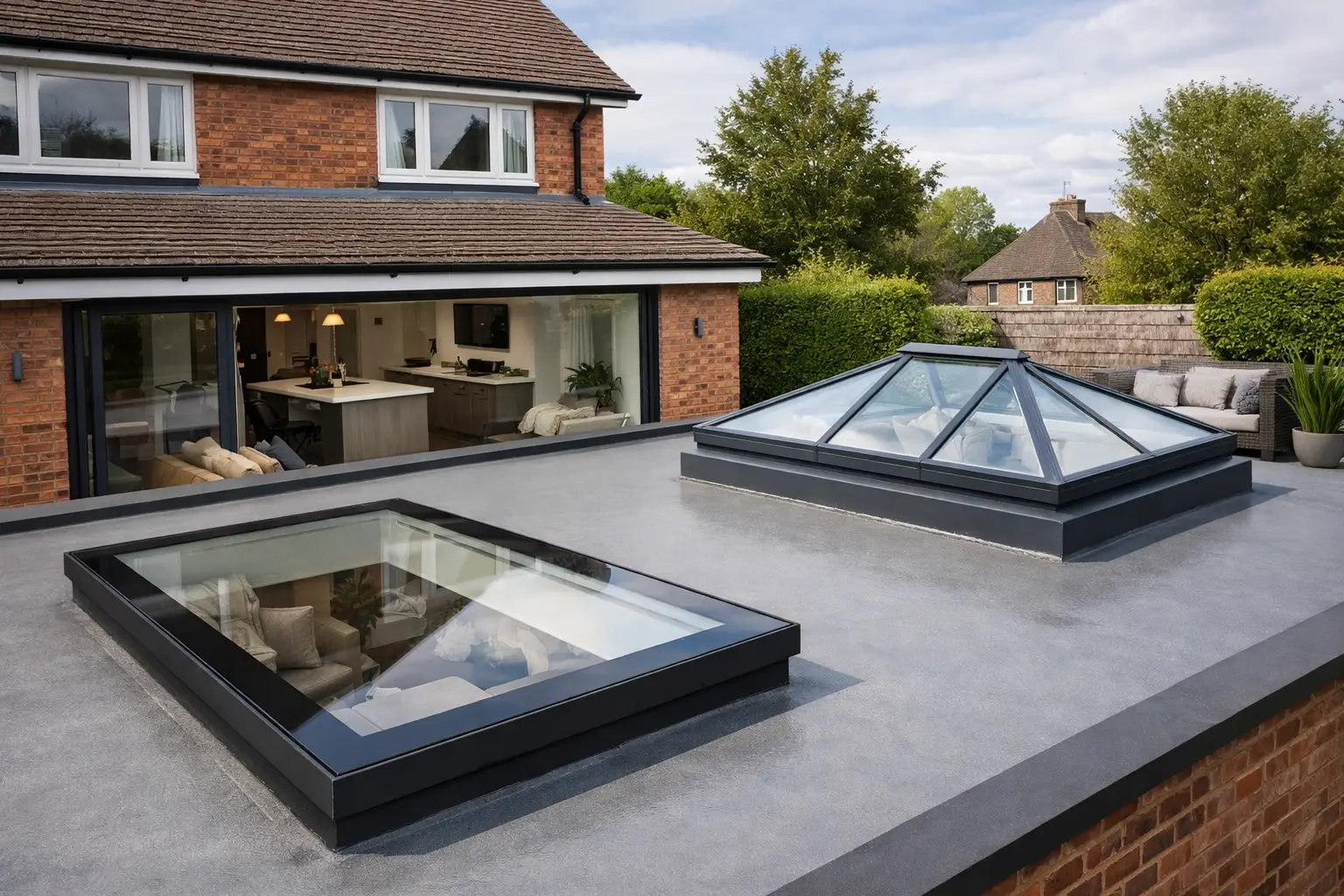
A roof light kerb on a flat roof may need perimeter trims at the roof edge and separate kerb or abutment detailing around the opening. A larger roof with parapet edges may use fewer visible perimeter trims at the outside edge but more termination and flashing details where the membrane meets vertical surfaces.
This is why a quick sketch of the roof can help. Mark the gutter edge, side edges, wall abutments and corners. Once you do that, the trim list usually becomes much clearer.
Mistakes to avoid when choosing flat roof trims
One of the most common mistakes is buying on shape alone. Two trims can look similar in a product image but be intended for different systems or edge conditions. The second is treating all edges the same when the roof has a mix of drainage and upstand details.
Another issue is underestimating exposure. On a sheltered garden outbuilding, a standard edge detail may be fine. On a roof facing stronger wind and driving rain, the fixing method and trim strength matter more. Trade installers know this from experience, but it is just as relevant for homeowners buying materials themselves.
Finally, do not forget the finish detail. Matching corners, joiners and fixings are not extras for the sake of it. They help the trim perform properly and keep the roof looking neat.
When to ask for support
If you are unsure what flat roof trim do I need, the safest approach is to identify three things before ordering: your roofing system, your edge types and your build-up thickness. With that information, choosing the correct trim becomes much more straightforward.
For straightforward jobs, that may be enough to order with confidence. For anything with multiple levels, unusual edge details or a mix of outlets and abutments, it is worth getting guidance before you buy. A dependable supplier should be able to help you match the trim profile to the job without overcomplicating it.
At Quality Roofing Supplies Ltd, that is exactly the sort of question we help customers with every day. Trade professionals usually want to get the correct parts ordered quickly, while domestic buyers often want reassurance that they are not missing a key component. Both need the same thing in the end – a flat roof edge detail that performs properly and lasts.
The best trim is not the one with the nicest profile on paper. It is the one that suits your roof system, fits the edge detail correctly and deals with water where it is supposed to go. Get that right, and the rest of the installation tends to fall into place.
Share This Article
Follow Us
Latest Articles
August 8, 2026
August 6, 2026
August 4, 2026
