Roof Lantern or Rooflight: Which to Choose?

When a room feels dark, heavy or closed in, the fix is often above your head. Choosing a roof lantern or rooflight can change how a space looks and works, but the right option depends on more than appearance. Build-up, budget, insulation, maintenance and the room below all matter.
For contractors, the decision usually comes down to fit, performance and ease of installation. For homeowners, it is often about natural light and the final finish. Both are valid. The key is choosing a product that suits the roof structure and the practical demands of the job, not just the look in a brochure.
Roof lantern or rooflight – what is the difference?
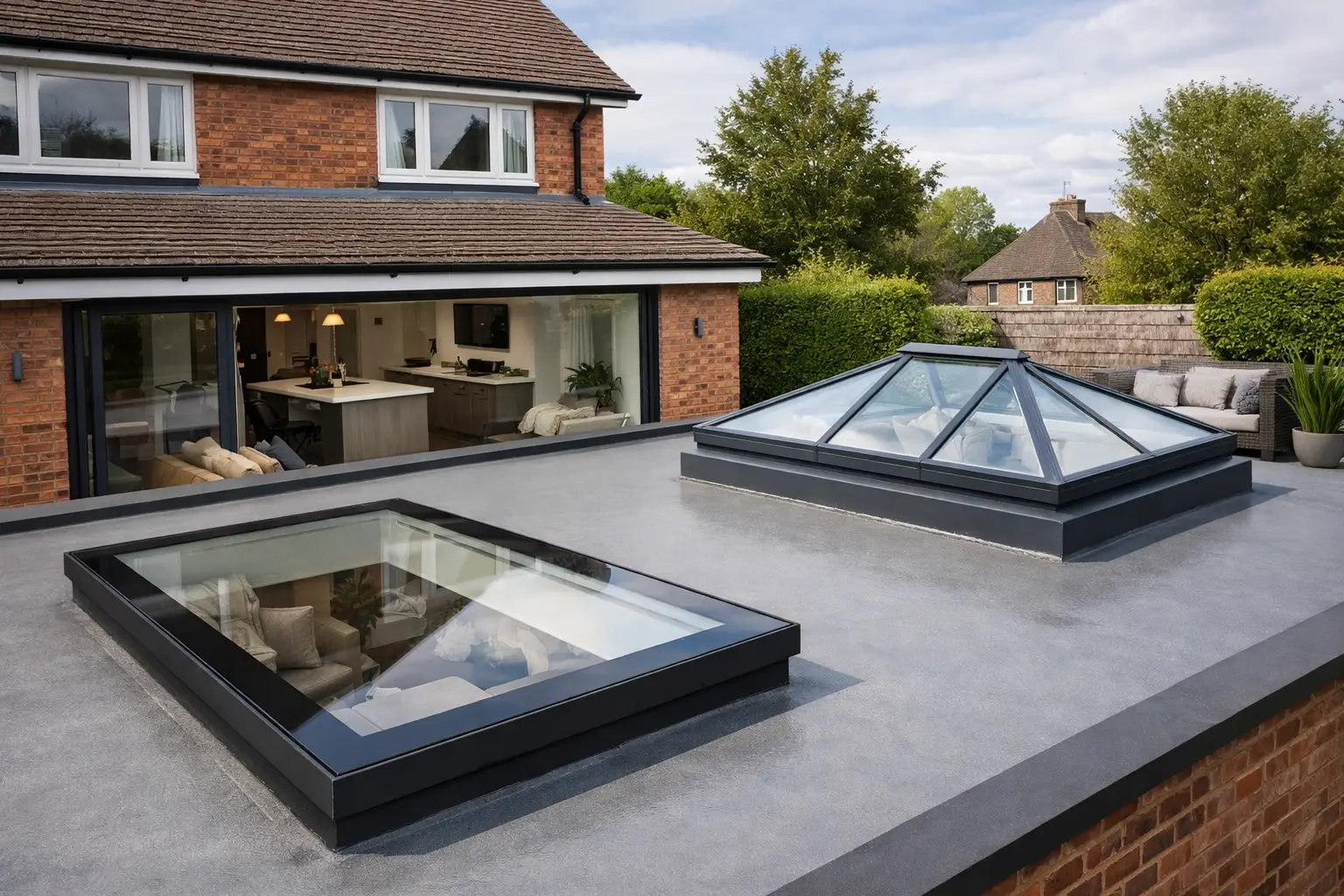
A rooflight is generally a glazed unit fitted into the roof to bring daylight into the room below. On flat roofs, this often means a fixed or opening glazed unit that sits low to the roofline. The profile is usually clean and simple, which makes it a popular choice for modern extensions, kitchens and utility spaces.
A roof lantern sits higher above the roof and has a framed, raised structure with glazed sides meeting at a ridge. It creates more architectural detail and can make a room feel taller and more open. In the right setting, a lantern becomes a design feature as much as a source of daylight.
That difference in shape affects more than appearance. It also influences cost, weathering, thermal performance, installation time and how much light is directed into the space.
When a rooflight makes more sense
In many projects, a rooflight is the more practical choice. It is usually simpler in form, easier to integrate into a flat roof system and often more cost-effective than a lantern. If the aim is to bring in daylight without making the roof structure more complicated, a rooflight is often the better fit.
This is especially true where clean lines matter. A low-profile rooflight suits contemporary flat roof extensions well and can help keep the external appearance neat. Internally, it gives a bright opening without drawing too much attention to the frame.
There are practical benefits too. Because the unit tends to be less complex, installation can be more straightforward, depending on the upstand and roof build-up. That can help reduce labour time and make planning easier for installers working to a schedule.
A rooflight is also worth considering where thermal efficiency is a priority. Product specification matters here, but in general, a simpler glazed unit can make it easier to compare performance figures and select the right level of insulation for the project.
When a roof lantern is the better option
A roof lantern tends to suit larger spaces where you want more than daylight alone. Open-plan kitchen extensions, dining areas and garden rooms often benefit from the added height and visual impact. The raised design can help a room feel less flat and give the ceiling line more character.
In some layouts, a lantern can spread light differently from a flat rooflight. Because the glazing sits on angled sides, it may draw light from more directions across the day. That said, the exact result depends on orientation, surrounding buildings and the size of the opening.
A lantern can also be the right choice where the client wants a stronger design statement. If the roof opening is a central feature of the room, the extra structure can feel intentional rather than purely functional. The trade-off is that this usually comes with a higher product cost and a more involved installation.
Cost, complexity and value
Budget matters, and this is where the choice often becomes clearer. In most cases, a rooflight will cost less than a comparable roof lantern. The product itself is usually less complex, and fitting it may involve fewer steps. For straightforward projects with tight budgets, that can make a real difference.
A lantern generally costs more because there is more frame, more detailing and a more prominent structure. That does not mean it is poor value. If the end result adds the look the client wants and changes the feel of the room, it may be money well spent. But it is important to be honest about what the budget is buying.
For trade buyers pricing a job, this is where clear specification helps. Comparing products on dimensions alone is not enough. Glazing type, frame quality, ventilation options, kerb requirements and lead times all affect the final cost.
Installation and roof build-up considerations
Before choosing either option, check the roof construction properly. A rooflight or lantern is only as good as the base it sits on. Upstand height, weatherproofing details, insulation build-up and compatibility with the roofing system all need to be right.
On flat roofs, the opening must be accurately formed and properly weathered. A poorly prepared kerb or incorrect falls can create problems that no glazing unit will solve. Installers already know this, but it is worth stressing for homeowners planning a self-build or renovation. The product choice should follow the roof design, not the other way round.
Weight is another factor. Some larger lanterns may place greater demands on the supporting structure than a smaller fixed rooflight. Span, opening size and access for installation all need to be considered early. On some jobs, getting a large glazed unit safely onto the roof is a practical issue in itself.
Ventilation may also influence the decision. Some rooflights are available in opening versions, which can be useful in kitchens, bathrooms and rooms that build up heat. Lanterns can also include ventilation options, but that may increase cost and complexity further.
Light, heat and comfort below
More glass does not always mean a better room. Daylight is welcome, but so is comfort. South-facing roofs can bring in strong sunlight and heat gain, especially in summer. Large glazed areas may need careful specification to avoid creating a room that looks good for half the year and overheats for the other half.
This is where glazing performance matters. U-values, solar control and glass specification all deserve attention. A cheaper unit that struggles with temperature control can become an expensive compromise once the room is in daily use.
There is also the question of glare. In kitchens and living spaces, direct overhead light can be excellent at one time of day and awkward at another. The best choice depends on how the room is used, where the opening sits and what the client expects from the finished space.
Appearance and maintenance
A rooflight usually gives a simpler, more understated finish. If the project calls for a clean roofline and minimal visual fuss, that is a strong point in its favour. It often works well in modern domestic builds and practical commercial settings alike.
A lantern is more decorative by nature. It adds form and presence, which some clients will love. Others may prefer something less prominent. Neither is right in every setting.
Maintenance should not be ignored. Any glazed unit on a roof will need cleaning and periodic checks, but a lantern has more frame detail and more surfaces involved. Dirt, leaves and general weathering can be more noticeable over time. For some customers that is a minor issue. For others, particularly on hard-to-reach roofs, it is worth thinking about before purchase.
How to choose the right roof lantern or rooflight
If the priority is a cost-effective way to bring natural light into a flat roof extension, a rooflight is often the sensible starting point. If the room needs more visual impact and the budget allows for it, a lantern may be worth the extra spend.
Ask a few basic questions early. How much structural work is involved? Is ventilation needed? Does the room below need simple daylight or a stronger architectural feature? How important are thermal performance and solar control? Those answers usually narrow the choice quickly.
For trade customers, reliability of supply matters just as much as specification. Delays on roofing products can hold up the wider job, particularly when internal works depend on the roof being made watertight. For homeowners, clear guidance is just as important. Buying the wrong size or unsuitable configuration can be an expensive mistake.
That is why practical product support matters. A dependable supplier such as Quality Roofing Supplies Ltd can help buyers compare options based on real installation needs, not just marketing claims.
The best result usually comes from keeping the decision simple. Match the product to the roof, the room and the budget, and you are far more likely to end up with a finish that performs well long after the installation is complete.
Share This Article
Follow Us
Latest Articles
August 8, 2026
August 6, 2026
August 4, 2026
