Best Roofing Felt for Sheds: Which Type Works?

A shed roof usually fails at the edges, laps and nail holes before the timber structure gives up. That is why choosing the best roofing felt for sheds is less about finding the cheapest roll and more about matching the material to the roof’s pitch, exposure and expected lifespan.
For a garden store, workshop or timber outbuilding, a mineral-surfaced bitumen felt remains a practical, cost-effective option. The right grade, properly fitted over a sound deck, can provide reliable weather protection for years. The wrong felt, or a rushed installation, can lead to cracking, lifting and leaks surprisingly quickly.
What makes the best roofing felt for sheds?
The best choice depends on how the shed is used and where it sits. A small storage shed in a sheltered garden does not need the same specification as a large workshop exposed to prevailing wind, driving rain and summer heat.
Start with the roof itself. Most sheds have a shallow pitched or gently sloping roof, so water must be directed cleanly into the gutter or beyond the drip edge. Felt needs enough strength to resist tearing at fixings, enough flexibility to lie flat over the deck, and a weatherproof surface that can cope with UV exposure.
For most domestic sheds, a good-quality mineral felt is the sensible starting point. It has a bitumen waterproofing layer and a mineral finish that protects the surface from sunlight and routine weathering. Compared with a basic, uncoated felt, it is generally better suited to the exposed top layer of a shed roof.
A heavier-duty felt costs more initially, but it often represents better value where access for future repairs will be awkward or where the building stores tools, machinery or other items that need dependable protection.
Choose the felt grade for the job
Roofing felt is commonly sold in different grades or weights. These indicate the material’s general strength and intended use, although exact specifications vary between products. Do not assume that a lightweight felt will perform like a trade-quality cap sheet simply because both look similar on the roll.
Basic felt for short-term or low-demand use
Lightweight shed felt can suit a temporary structure, a small log store or an outbuilding with a limited expected service life. It is easier to handle and usually has a lower purchase cost, but it is more prone to damage during fitting and less tolerant of harsh weather.
This option can make sense when budget is the overriding factor, provided expectations are realistic. It is not normally the best choice for a workshop, garden office or shed that needs long-term protection.
Mineral felt for standard garden sheds
Mineral-surfaced bitumen felt is the usual choice for a permanent shed roof. Its textured surface helps protect the waterproof layer from sunlight, while the material is generally strong enough for normal installation and maintenance work.
Look for a product intended as an external finish rather than a lining layer. Some felts are designed for use beneath another covering or within a multi-layer roof build-up, so they should not be used as the exposed surface unless the manufacturer states otherwise.
Heavy-duty felt for exposed or high-value buildings
A thicker, reinforced roofing felt is worth considering for larger sheds, workshops and buildings in exposed locations. Reinforcement improves tear resistance and dimensional stability, which matters around laps, roof edges and areas affected by wind uplift.
Heavy-duty products can be less forgiving to fit in cold weather because they are stiffer. Allowing the rolls to relax before fitting and working on a dry, mild day makes a noticeable difference. The extra material cost is usually modest compared with replacing a failed covering and repairing damaged timber beneath it.
Match the felt to the roof deck and slope
Felt performs only as well as the surface underneath it. Before ordering materials, inspect the roof deck for soft spots, loose boards, raised fixings and sagging sections. Replace damaged timber or sheet material first. Felt will follow every hollow and bump in the deck, allowing water to sit where it should drain away.
A shed roof needs a clear fall to shed water. If water ponds after rainfall, fitting a new layer of felt alone will not solve the underlying issue. Correct the roof structure or drainage route before re-covering.
On a typical timber shed, felt is fixed over clean, dry roof boards or exterior-grade sheet material. A suitably positioned eaves or drip detail helps carry water away from the fascia and timber edges. Without it, water can track back beneath the felt and cause rot at the most vulnerable part of the roof.
Installation details that affect lifespan
Good material choices can be undone by poor fitting. Felt should be installed in dry conditions, with the roof surface free from dust, standing water and loose debris. Cold, damp or windy conditions make the work harder and increase the risk of creases, poor adhesion and lifted edges.
Lay the first course at the lowest edge of the roof and work upwards, so each higher course overlaps the one below. This arrangement encourages rainwater to run over the laps rather than into them. Follow the lap widths specified for the product, as narrow overlaps are a common source of leaks.
Fixings matter just as much as the felt. Use galvanised clout nails or the fixings recommended for the system, placed at sensible intervals and kept clear of areas where water naturally runs. Overdriving nails can tear the felt; underdriving them leaves raised heads that can wear through the surface over time.
The roof perimeter deserves particular care. Felt edges should be securely fixed and protected with appropriate edging where required. Wind catches loose edges first, then works beneath the covering. Once lifting begins, it can quickly spread across a whole run of felt.
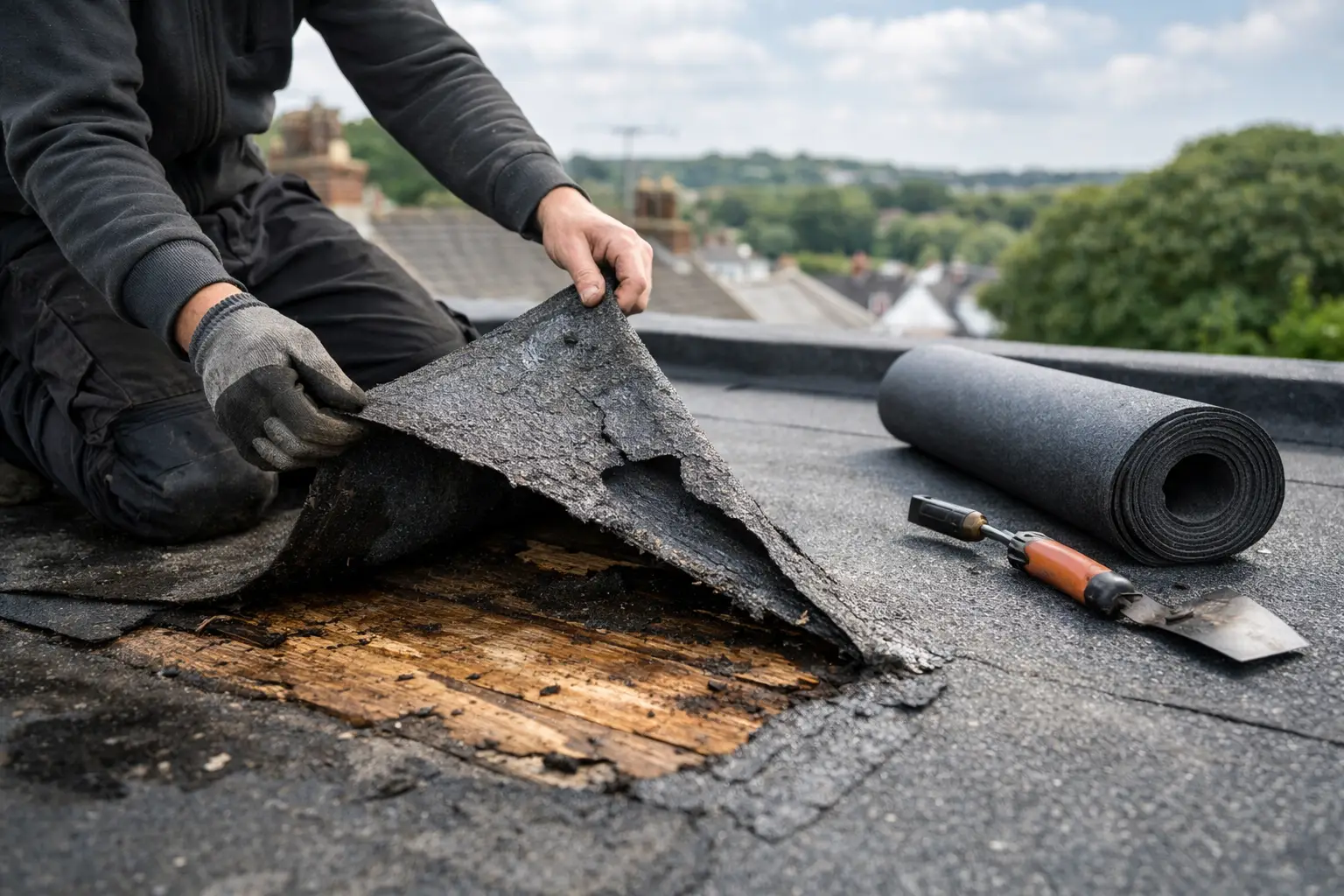
Avoid laying new felt directly over badly cracked, wet or unstable old material. A sound existing covering can sometimes be overlaid, but only when the deck remains firm, the roof profile is true and the added thickness will not obstruct drainage details. Stripping back to a clean deck is often the more dependable repair.
Felt, adhesive and edge trims should work together
A shed roof is a small system, not just a roll of covering. The felt, adhesive, nails and roof-edge components need to suit one another. Using incompatible products can affect adhesion or leave exposed edges that deteriorate early.
Bitumen adhesive can be useful for laps, repairs and detailing, but it should be used in accordance with the product guidance. Too much adhesive can create uneven areas and squeeze-out; too little may not provide a secure seal. Mechanical fixings are still essential where the system requires them.
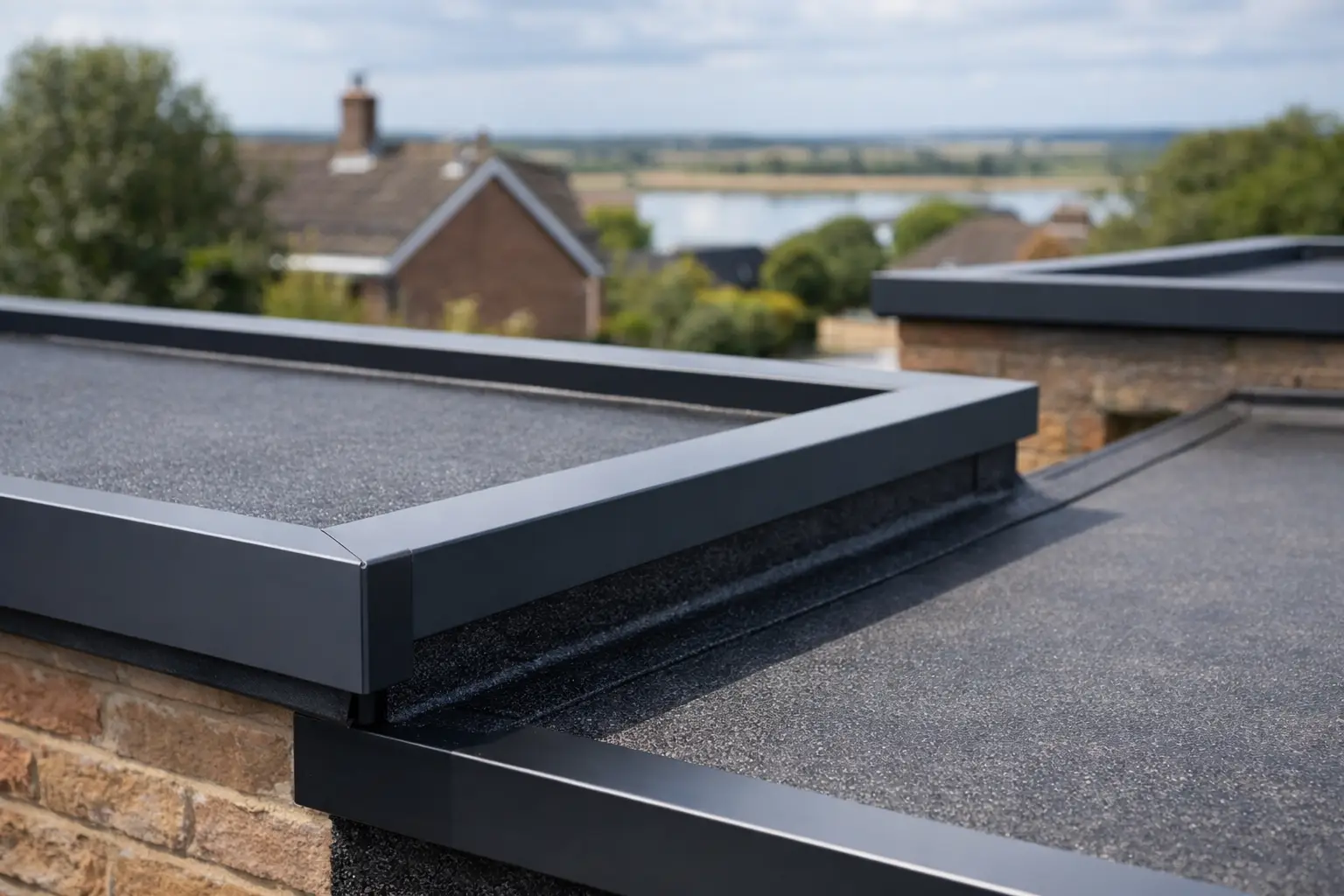
Purpose-made edge trims can improve the finish and help manage water at verges and eaves. They are particularly useful on sheds that are exposed to wind or have roof edges that would otherwise be difficult to protect neatly. They also make future maintenance easier because the felt termination is clear and secure.
For installers and homeowners sourcing materials together, Quality Roofing Supplies Ltd offers trade-quality roofing products and practical accessories that help avoid the common problem of mixing unsuitable components.
How long should shed roofing felt last?
Service life varies with material quality, roof exposure, installation and maintenance. A budget felt may provide only a few years of service in a demanding position, while a properly fitted heavy-duty mineral felt can last substantially longer. Strong sun, overhanging branches, standing water and poorly secured edges will shorten the lifespan of any felt.
Inspect the roof at least once a year and after severe weather. Check for lifted laps, tears, exposed nail heads, splits around corners and debris that is preventing drainage. Small repairs are usually straightforward when dealt with early. Leaving a split open through a wet winter can turn a simple felt repair into a deck replacement.
Buying the right quantity
Measure the length and slope of each roof face, then add allowance for overlaps, eaves and verge details. Do not order to the exact roof area. A roll may look generous on paper but become short once proper laps and edge turn-downs are included.
If the roof has an unusual shape, rooflights, vents or separate sections, sketch it out before buying. This makes it easier to calculate material use and identify where additional adhesive, fixings or trims will be needed.
The best roofing felt is the one that suits the roof, is installed with compatible components and is not compromised to save a small amount at the point of purchase. Choose a durable mineral or heavy-duty option where the shed matters, prepare the deck carefully, and give the edges the same attention as the main roof area. That approach keeps the job straightforward now and reduces the chance of an unwelcome leak later.
Share This Article
Follow Us
Latest Articles
August 10, 2026
August 8, 2026
August 6, 2026
